Showing posts with label ecology. Show all posts

Adaptive Radiation

Galapagos cacti
Galapagos cacti

In adaptive radiation, numerous species evolve from a common ancestor introduced into an environment with diverse ecological niches. The progeny evolve genetically into customized variations of themselves, each adapting to survive in a particular niche.

In 1898 Henry F. Osborn identified and developed the evolutionary phenomenon known as adaptive radiation, whereby different forms of a species evolve, quickly in evolutionary terms, from a common ancestor.

According to the principles of natural selection, organisms that are the best adapted (most fit) to compete will live to reproduce and pass their successful traits on to their offspring. The process of adaptive radiation illustrates one way in which natural selection can operate when members of one population of a species are cut off or migrate to a different environment that is isolated from the first.

Animal-plant Interactions

Animal-plant Interactions

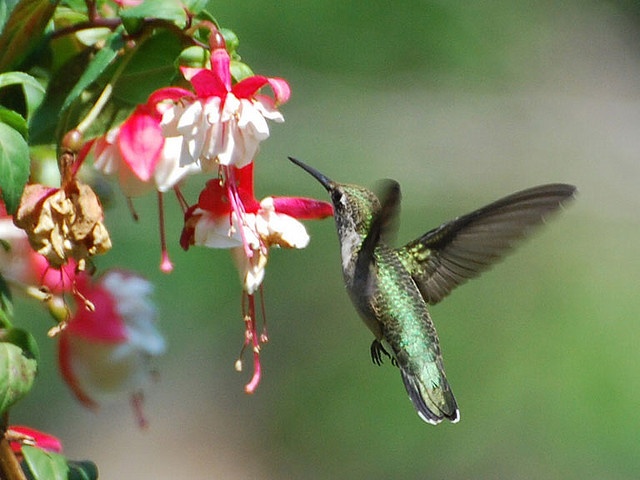
The ways in which certain animals and plants interact have evolved in some cases to make them interdependent for nutrition, respiration, reproduction, or other aspects of survival.

Ecology represents the organized body of knowledge that deals with the relationships between living organisms and their nonliving environments. Increasingly, the realm of ecology involves a systematic analysis of plant-animal interactions through the considerations of nutrient flow in food chains and food webs, exchange of such important gases as oxygen and carbon dioxide between plants and animals, and strategies of mutual survival between plant and animal species through the processes of pollination and seed dispersal.

A major example of animal-plant interactions involve the continual processes of photosynthesis and cellular respiration. Green plants are classified as ecological producers, having the unique ability, by photosynthesis, to take carbon dioxide and incorporate it into organic molecules.

Biological Invasions

Biological Invasions

Biological invasions are the entry of a type of organism into an ecosystem outside its historic range. In a biological invasion, the "invading" organism may be an infectious virus, a bacterium, a plant, an insect, or an animal.

Species introduced to an area from somewhere else are referred to as alien or exotic species or as invaders. Because an exotic species is not native to the new area, it is often unsuccessful in establishing a viable population and disappears.

The fossil record, as well as historical documentation, indicates that this is the fate of many species in new environments as they move from their native habitats. Occasionally, however, an invading species finds the new environment to its liking.

Biomass Related to Energy

Biomass Related to Energy

The relationship between the accumulation of living matter resulting from the primary production of plants or the secondary production of animals (biomass) and the energy potentially available to other organisms in an ecosystem forms the basis of the study of biomass related to energy.

Biomass is the amount of organic matter, such as animal and plant tissue, found at a particular time and place. The rate of accumulation of biomass is termed productivity. Primary production is the rate at which plants produce new organic matter through photosynthesis.

Secondary production is the rate at which animals produce their organic matter by feeding on other organisms. Biomass is an instantaneous measure of the amount of organic matter, while primary and secondary production give measures of the rates at which biomass increases.

Types of Biomes

Types of Biomes
Types of Biomes

The major recognizable life zones of the continents are divided into biomes, characterized by their plant communities.

Temperature, precipitation, soil, and length of day affect the survival and distribution of biome species. Species diversity within a biome may increase its stability and capability to deliver natural services, including enhancing the quality of the atmosphere, forming and protecting the soil, controlling pests, and providing clean water, fuel, food, and drugs. Major biomes include the temperate, tropical, and boreal forests; tundra; deserts; grasslands; chaparral; and oceans.

Temperate Forests

The temperate forest biome occupies the so called temperate zones in the midlatitudes (from about 30 to 60 degrees north and south of the equator). Temperate forests are found mainly in Europe, eastern North America, and eastern China, and in narrow zones on the coasts of Australia, New Zealand, Tasmania, and the Pacific coasts of North and South America. Their climates are characterized by high rainfall and temperatures that vary from cold to mild.

Biosphere Concept

Biosphere Concept
Biosphere Concept

The term "biosphere" was coined in the nineteenth century by Austrian geologist Eduard Suess in reference to the 20-kilometer-thick zone extending from the floor of the oceans to the top of mountains, within which all life on earth exists.

Thought to be more than 3.5 billion years old, the biosphere supports nearly one dozen biomes, regions of climatic conditions within which distinct biotic communities reside.

Compounds of hydrogen, oxygen, carbon, nitrogen, potassium, and sulfur are cycled among the four major spheres, one of which is the biosphere, to make the materials that are essential to the existence of life.

Carbon Cycle

Carbon Cycle
Carbon Cycle

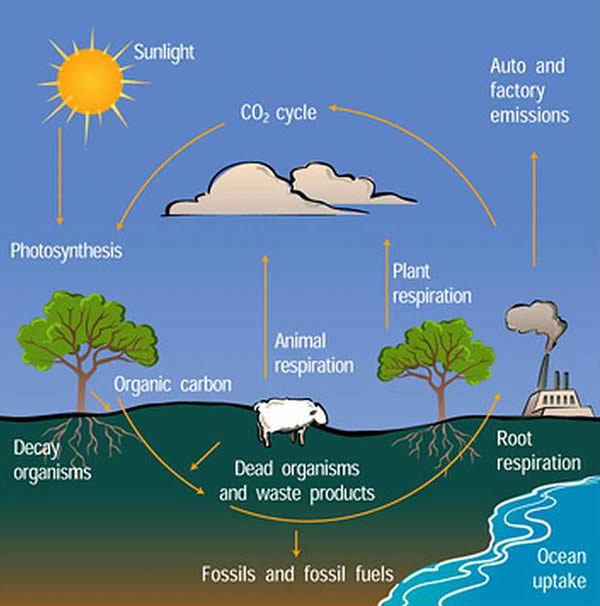
The carbon cycle is the movement of the element carbon through the earth’s rock and sediment, the aquatic environment, land environments, and the atmosphere. Large amounts of organic carbon can be found in both living organisms and dead organic material.

An enormous reservoir of carbon, on the order of 20 x 1015 tons, may be found on the surface of the earth. Most of this reservoir is found in rock and sediment. The carbon cycle therefore represents the movement of this element through the biosphere in a process mediated by photosynthetic plants on land and in the sea.

The process involves the fixation of carbon dioxide (CO2) into organic molecules, a process called photosynthesis. Energy used in the process is stored in chemical form, such as that in carbohydrates (sugars such as glucose). The organic material is eventually oxidized, as occurs when a photosynthetic organism dies.

Clines

Clines
Clines

A cline is one form of geographic variation in which characteristics of a species change gradually through the species’ geographic range.

Many plant and animal species have populations that differ in terms of their morphological, physiological, and biochemical characteristics. A species is generally defined as a group of organisms that have the potential to interbreed and produce fertile offspring.

A population is defined as a group of organisms which are actively interbreeding. The following example will clarify the relationship between species and populations and simultaneously introduce geographic variation.

Coevolution

Coevolution
Coevolution

Coevolution is the interactive evolution of two or more species that results in a mutualistic or antagonistic relationship.

When two or more different species evolve in a way that affects one another’s evolution, coevolution is taking place. This interactive type of evolution is characterized by the fact that the participant life-forms are acting as a strong selective pressure upon one another over a period of time.

The coevolution of plants and animals, whether animals are considered strictly in their plant-eating role or also as pollinators, is abundantly represented in every terrestrial ecosystem throughout the world where flora has established itself.

Community - Ecosystem Interactions

Community, ecosystem Interactions

Ecosystems are complex organizations of living and nonliving components. They are frequently named for their dominant biotic or physical features (such as marine kelp beds or coniferous forests).

Communities are groups of species usually classified according to their most prominent members (such as grassland communities or shrub communities). The interactions between species and their ecosystems have lasting impacts on both.

In an ecological sense, a community consists of all populations residing in a particular area. Examples of communities range in scale from all the trees in a given watershed, all soil microbes on an agricultural plot, or all phytoplankton in a particular harbor to all plants, animals, and microbes in vast areas, such as the Amazon basin or the Chesapeake Bay.

Community Structure and Stability

Community Structure and Stability

An ecological community is the assemblage of species found in a given time and place. The species composition of different ecosystems and the ways in which they maintain equilibrium and react to disturbances are manifestations of the community’s stability.

The populations that form a community interact through the processes of competition, predation, parasitism, and mutualism. The structures of communities are determined, in part, by the nature and strength of these biotic factors.

Abiotic factors (physical factors such as temperature, rainfall, and soil fertility) are the other set of important influences determining community structure.

Competition

Plant competition
Plant competition

The struggle for food, space, and pollinators in order to survive can occur between individuals of different species (interspecific competition) or between individuals of the same species (intraspecific competition).

Competition is a major driving force in evolution, the process by which living organisms change over time, with better-adapted species surviving and less well-adapted species becoming extinct.

Evolution begins with mutation, changes in the nucleotide sequence of a gene or genes, resulting in the production of slightly altered genes which encode slightly different proteins.

Dendrochronology

Dendrochronology
Dendrochronology

Dendrochronology is the science of examining and comparing growth rings in both living and aged woods to draw inferences about past events and environmental conditions.

In forested regions with seasonal climates, trees produce a growth ring to correspond with each growing season. At the beginning of the growing season, when conditions are optimum, the vascular cambium produces many files of large xylem cells that form wood.

As the conditions become less optimal, the size and number of cells produced decreases until growth stops at the end of the growing season. These seasonal differences in size and number of cells produced are usually visible to the unaided eye.

Ecology: Concept

Ecology: Concept
Ecology: Concept

Ecology is the scientific study of ecosystems, which are generally defined as local units of nature, consisting of the aggregate of plants, animals, the physical environment, and their interactions.

Ecosystems consist of both biotic (living) and abiotic (nonliving) components. Biotic components include plants, animals, and microorganisms. The abiotic components are the physical factors of the ecosystem. The roots of ecology can be traced to the writings of early Greek philosophers such as Aristotle and Theophrastus, who were keen observers of plants and animals in their natural habitats.

During the nineteenth century, German biogeographer Alexander von Humboldt and English naturalist Charles Darwin wrote detailed descriptions of their travels. They recognized that the distribution of living things is determined by such factors as rainfall, temperature, and soil.

Ecosystems: Overview

ecosystems
ecosystems

An ecosystem is made up of the complex interactions of a community of organisms of different species with one another and with their abiotic (nonliving) environment.

A biological community consists of a mixture of populations of individual species; a population consists of potentially interbreeding members of a species. Individual organisms interact with members of their own species as well as with other species. An ecosystem is formed by this web of interactions among species, along with the physical, chemical, and climatic conditions of the area.

Abiotic and Biotic Interactions

Abiotic environmental conditions include temperature, water availability, soil nutrient content, and many other factors that depend on the climate, soil, and geology of an area. Living organisms can alter their environment to some degree. A canopy formed by large forest trees, for example, will change the light, temperature, and moisture available to herbaceous plants growing near the forest floor.

Ecosystems: Studies

Studies ecosystems
Studies ecosystems

The study of ecosystems defines a specific area of the earth and the attendant interactions among organisms and the physical-chemical environment present at the site.

Ecosystems are viewed by ecologists as basic units of the biosphere, much as cells are considered by biologists to be the basic units of an organism. Ecosystems are self-organized and self-regulating entities within which energy flows and resources are cycled in a coordinated, interdependent manner to sustain life.

Disruptions and perturbations to, or within, the unit’s organization or processes may reduce the quality of life there or cause its demise. Ecosystem boundaries are usually defined by the research or management questions being asked.

Food Chain

Food Chain

The food chain concept allows ecologists to interconnect the organisms living in an ecosystem and to trace mathematically the flow of energy from plants through animals to decomposers.

The food chain concept provides the basic framework for production biology and has major implications for agriculture, wildlife biology, and calculating the maximum amount of life that can be supported on the earth. As early as 1789, naturalists such as Gilbert White described the many sequences of animals eating plants and themselves being eaten by other animals.

However, the use of the term “food chain” dates from 1927, when Charles Elton described the implications of the food chain and food web concept in a clear manner. His solid exposition advanced the study of two important biological concepts: the complex organization and interrelatedness of nature, and energy flow through ecosystems.

Gene Flow

Gene flow

Gene flow represents a recurrent exchange of genes between populations. This exchange results when immigrants from one population interbreed with members of another.

Charles Darwin published On the Origin of Species by Means of Natural Selection in 1859. Since then, scientists have modified and added new concepts to the theory of evolution by natural selection. One of those concepts, which was only dimly understood in Darwin’s lifetime, is the importance of genetics in evolution, especially the concepts of migration and gene flow.

Genes

Genes are elements within the cells of a living organism that control the transmission of hereditary characteristics by specifying the structure of a particular protein or by controlling the function of other genetic material. Within any species, the exchange of genes via reproduction is constant among its members, ensuring genetic similarity.

Genetic Drift

Genetic Drift

Genetic drift refers to random changes in the genetic composition of a population. It is one of the evolutionary forces that cause biological evolution, the others being selection, mutation, and migration, or gene flow.

Drift occurs because the genetic variants, or alleles, present in a population are a random sample of the alleles that adults in the previous generation would have been predicted to pass on, where predictions are based on expected migration rates, expected mutation rates, and the direct effects of alleles on fitness.

If this sample is small, then the genetic composition of the offspring population may deviate substantially from expectation, just by chance. This deviation is called genetic drift.

Hydrologic Cycle

hydrologic cycle
hydrologic cycle

The hydrologic cycle is a continuous system through which water circulates through vegetation, in the atmosphere, in the ground, on land, and in surface water such as rivers and oceans.

The sun and the force of gravity provide the energy to drive the cycle that provides clean, pure water at the earth’s surface. The total amount of water on earth is an estimated 1.36 billion cubic kilometers. Of this water, 97.2 percent is found in the earth’s oceans. The ice caps and glaciers contain 2.15 percent of the earth’s water.

The remainder, 0.65 percent, is divided among rivers (0.0001 percent), freshwater and saline lakes (0.017 percent), groundwater (0.61 percent), soil moisture (0.005 percent), the atmosphere (0.001 percent), and the biosphere and groundwater below 4,000 meters (0.0169 percent). While the percentages of water appear to be small for these water reservoirs, the total volume of water contained in each is immense.