Showing posts with label biomes. Show all posts

Arctic Tundra

A tiny creek flows through a tundra-covered valley, Gates of the Arctic National Park, Alaska.
Arctic Tundra

The Arctic tundra is a biome representing the northernmost limit of plant growth on earth. Arctic tundra has a circumpolar distribution in the Northern Hemisphere, extending from the ice cap southward to the forested taiga of North America, Europe, and Asia. Tundra is also found on islands within the Arctic Ocean and along coastal Greenland.

The term "tundra" was derived from the Finnish word for a treeless or barren landscape. The Arctic tundra biome is located within one of the harshest climates on earth for plant growth, with winter temperatures averaging –34 degrees Celsius (–30 degrees Fahrenheit).

The climate is comparatively dry, with annual precipitation of 150 to 250 millimeters (6 to 10 inches). Locked in snow or frozen within soil, the majority of moisture is not available for plant use.

Types of Biomes

Types of Biomes
Types of Biomes

The major recognizable life zones of the continents are divided into biomes, characterized by their plant communities.

Temperature, precipitation, soil, and length of day affect the survival and distribution of biome species. Species diversity within a biome may increase its stability and capability to deliver natural services, including enhancing the quality of the atmosphere, forming and protecting the soil, controlling pests, and providing clean water, fuel, food, and drugs. Major biomes include the temperate, tropical, and boreal forests; tundra; deserts; grasslands; chaparral; and oceans.

Temperate Forests

The temperate forest biome occupies the so called temperate zones in the midlatitudes (from about 30 to 60 degrees north and south of the equator). Temperate forests are found mainly in Europe, eastern North America, and eastern China, and in narrow zones on the coasts of Australia, New Zealand, Tasmania, and the Pacific coasts of North and South America. Their climates are characterized by high rainfall and temperatures that vary from cold to mild.

Deserts

Deserts
Deserts

Regions characterized by 10 inches or less of precipitation per year as considered deserts. Plants in desert biomes are typically specialized to endure the harsh conditions found there.

Deserts are regions, or biomes, too dry to support grasslands or forest vegetation but with enough moisture to allow specially adapted plants to live. In deserts, hot days alternate with cold nights.

Ninety percent of incoming solar radiation reaches the ground during the day, and 90 percent of that is radiated back out into space at night, the result of the absence of clouds, low humidity, and sparse vegetation.

Mediterranean Scrub

Mediterranean Scrub
Mediterranean Scrub

Mediterranean scrub vegetation is dominated by fire-adapted shrubs. The biome fringes the Mediterranean Sea, for which it is named, but is also found along western coasts of continents in areas with warm, dry summers and moist, cool winters.

Regions with mediterranean vegetation are coastal regions between 30 and 45 degrees north latitude or between 30 and 45 degrees south latitude.

The air circulating around high-pressure zones over adjacent oceans guides storms away from the coast in the warm season but changes position in concert with the tilt of the earth on its axis and brings storms onto the coast in the cool season. As a result, the warm season is dry, and the cool season is moist. Fire is an important component of mediterranean environments, especially after the warm, dry summer.

Rain Forest Biomes

Rain Forest Biomes
Rain Forest Biomes

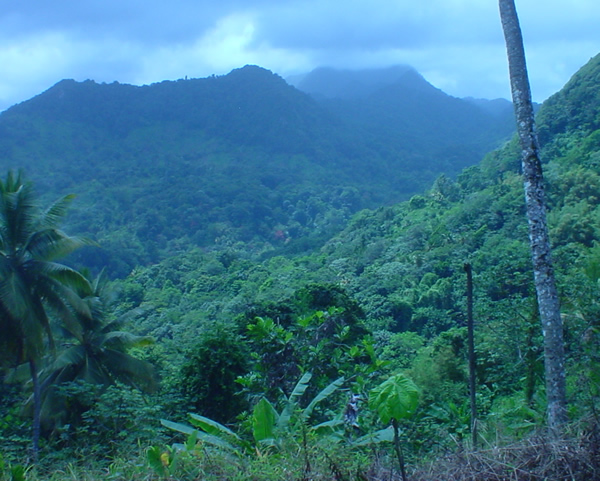
Tropical forests exist in frost-free areas between the Tropic of Cancer and the Tropic of Capricorn. Temperatures range from warm to hot year-round. These forests are found in northern Australia, the East Indies, Southeast Asia, equatorial Africa, and parts of Central America and northern South America.

Rain forests are complicated tropical ecosystems with extremely high levels of biodiversity. Occupying only 6 percent of the earth’s surface, they contain at least 50 percent of the world’s known plant and animal species.

The rain forests are being destroyed at such an unprecedented rate, however, that if the trend continues, no sustainable tropical rain forests will remain by the middle of the twenty-first century.

Savannas and Deciduous Tropical Forests

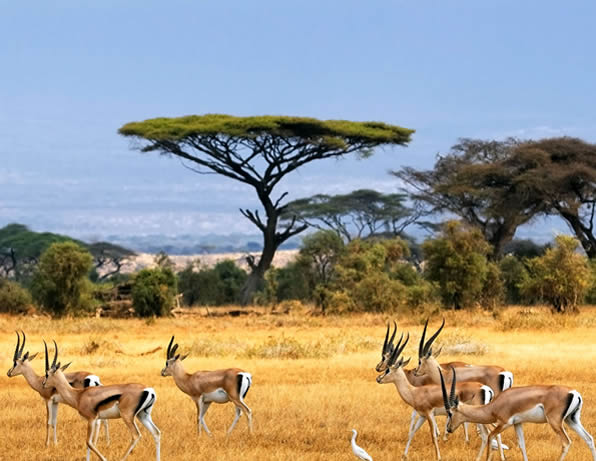
Savanna grassland
Savanna grassland

Savannas are areas of continuous grass or sedge cover beneath trees that range from scattered, twisted, and gnarled individuals to open wood lands. Deciduous tropical forests have continuous to open forest cover and undergo a leafless period during a seasonally lengthy dry season.

Where the annual rainfall in tropical regions is less than 2,000 millimeters and three to six months out of the year are dry, savannas and deciduous forests are common. Both savannas and deciduous tropic forests often occur where the annual rainfall is less than that of savannas. Together, the two biomes are referred to here as the dry tropical biome.

A pronounced pattern of seasonally wet and dry periods is the most important factor affecting the distribution of these types of plant cover. Higher soil fertility favors forest over grasses and savanna such as in the cerrado of Brazil, which occurs only on certain geological formations and low-nutrient soils.

Taiga

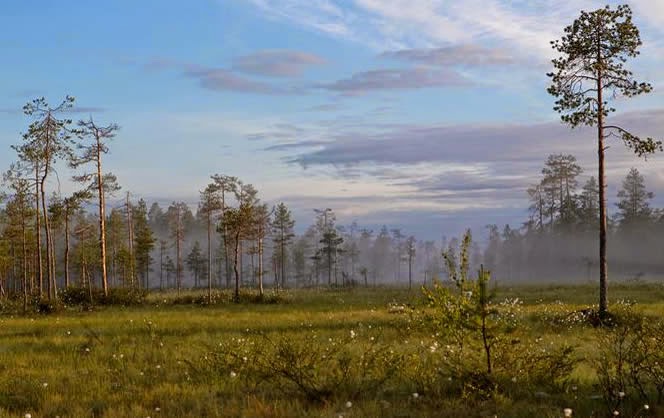
Taiga in Findland
Taiga in Findland

“Taiga” derives from a Russian word for the forests of cone-bearing, needle-leaved, generally evergreen trees of northern Eurasia and North America. “Coniferous forest” and “boreal forest” are other names given to this biome.

Some botanists include the temperate rain forests along the Pacific Coast of North America and the coniferous forests in the western mountains in the taiga.

While the term “coniferous forest” can be applied to temperate rain forest and coniferous forest biomes in the western mountains, the terms “taiga” and “boreal forest” should be restricted to the northern forests. “Taiga” is also sometimes used in a more restricted way, to mean a subdivision of the boreal forest.

Tundra and High-Altitude Biomes

Tundra and High-Altitude Biomes

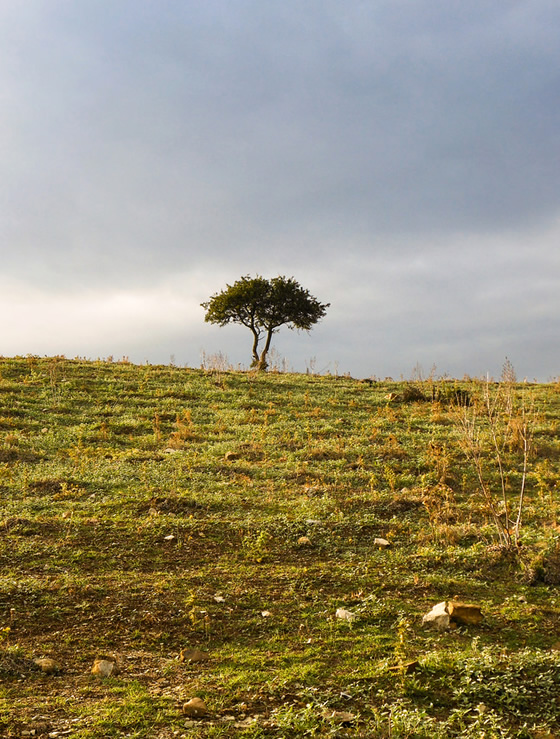
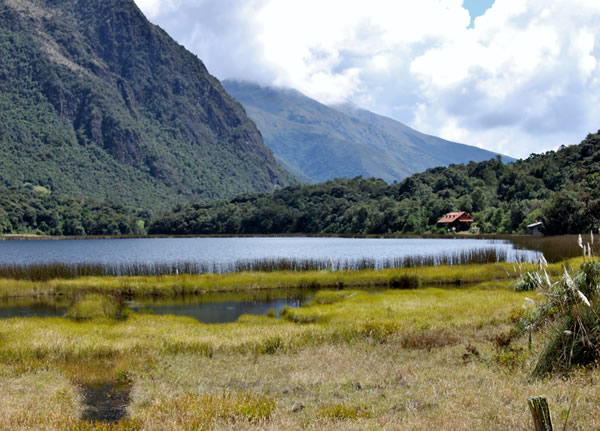
Regions where no trees grow because of frozen soil or extreme water runoff due to steep grades (at high altitudes) are known as tundra. High altitude biomes have similar limitations on the growth of plant life.

Tundra landscapes appear where long, cold winters, a permanently frozen subsoil, and strong winds combine to prevent the development of trees. The resulting landscapes tend to be vast plains with low-growing forbs and stunted shrubs.

Vast areas of this biome encircle the northernmost portions of North America and Eurasia, constituting the Arctic tundra. Climatic conditions atop high mountains at all latitudes are similar; these small, isolated areas are called the alpine tundra.