Showing posts with label gymnosperms. Show all posts

Conifers

Forest trees
Conifers

The conifers, which are woody plants consisting mostly of evergreen trees, make up the phylum Coniferophyta, one of four phyla of gymnosperms that have living representatives. The word “conifer”means cone-bearing. Most conifers bear their reproductive structures in cones.

With 50 genera and 550 of the 700 known gymnosperm species, the phylum Coniferophyta includes the bulk of the gymnosperms. Coniferophyta is also the most widespread and, in terms of numbers of individual trees, the most abundant of the gymnospermphyla.

The abundance and economic and ecological importance of the Coniferophyta are out of all proportion to the number of species, which does not begin to compare to the 235,000 species of angiosperms (phylum Anthophyta).

Cycads and Palms

Cycads and Palms
Cycads and Palms

Members of the phylum Cycadophyta, cycads are descendants of giant, prehistoric seed-bearing, nonflowering plants that thrived when dinosaurs lived. Palms are flowering plants with primitive origins that share characteristics with cycads but are not related to them.

Cycadophyta is one of the four phyla of gymnosperms in the kingdom Plantae. At one time, cycads grew on every continent. Fossil cycads have been located in areas where no modern cycads grow, such as Antarctica and Europe, suggesting that those places once had milder temperatures.

Origins and Habitat

The oldest cycad fossils are 245 to 208 million years old, from the Triassic period. The first cycads are believed to have appeared in the Permian period 270 million years ago. Some botanists hypothesize that cycads originated as progymnosperms in the Devonian period about 408 million to 360 million years ago.

Dendrochronology

Dendrochronology
Dendrochronology

Dendrochronology is the science of examining and comparing growth rings in both living and aged woods to draw inferences about past events and environmental conditions.

In forested regions with seasonal climates, trees produce a growth ring to correspond with each growing season. At the beginning of the growing season, when conditions are optimum, the vascular cambium produces many files of large xylem cells that form wood.

As the conditions become less optimal, the size and number of cells produced decreases until growth stops at the end of the growing season. These seasonal differences in size and number of cells produced are usually visible to the unaided eye.

Ginkgos

Ginkgo
Ginkgo

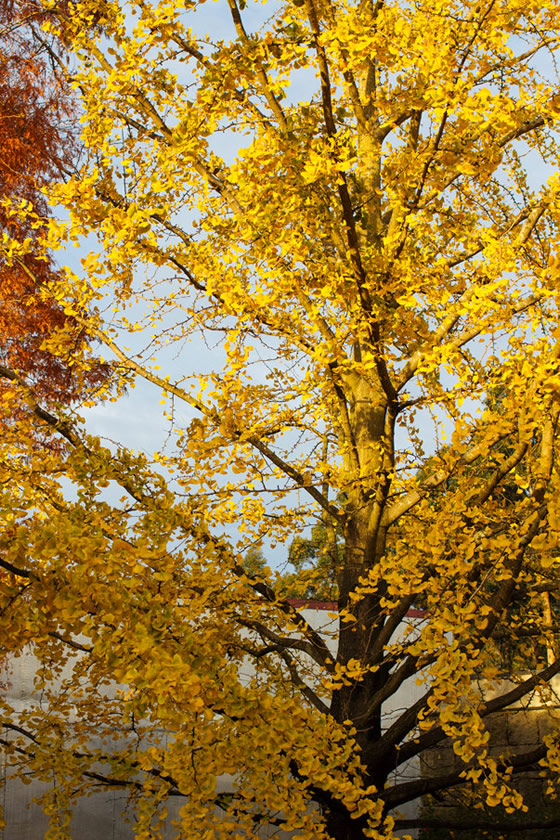
The ginkgos, phylum Ginkgophyta, constitute one of four phyla of the gymnosperms in the kingdom Plantae. Ginkgo biloba, the maiden hair tree, is the only living representative of the ginkgo family, Ginkgoaceae, a group of plants that have lived for millions of years and are identified by an abundant fossil record.

The ginkgo is a hairless, deciduous tree with a straight trunk and pyramid-shaped foliage usually sparsely branched when young, becoming denser with age. Leaves are fan-shaped, 2 to 3 inches (5 to 7.5 centimeters) across, sometimes divided into two lobes.

The ginkgo normally reaches heights of 80 to 100 feet (24 to 30meters) and under favorable conditions grows to 125 feet (38 meters) or more. The bark is reddish-gray and corky, with irregular, wide fissures dividing rough plates. On old trees, the bark becomes gray, rough, and deeply furrowed.

Gnetophytes

Gnetophytes
Gnetophytes

The gnetophytes are a small group of vascular seed plants composing the phylum Gnetophyta, which is one of four phyla of gymnosperms that have living representatives.

The Gnetophyta include only three genera Ephedra, Gnetum, and Welwitschia—each of which belongs to a separate family, in a single order, the Gnetales. The gnetophytes have a number of features in common with the flowering plants (phylum Anthophyta, the angiosperms), which has sparked scientific interest in the evolutionary relationships between the two groups; they are the only gymnosperms, for example, in which vessels occur.

There are about ninety species of gnetophytes. They are diverse in form and size, and their distribution varies widely, from moist, tropical environments to extremely dry deserts. Most gnetophytes are shrubs or woody vines. The leaves occur oppositely or in whorls of three.

Gymnosperms

Pine trees are a familiar example of gymnosperms
Gymnosperms: pine trees

Pine trees are a familiar example of gymnosperms, a series of evolutionary lines of woody vascular seed plants that produce seeds not encased in an ovary.

Two kinds of higher plants—the gymnosperms and angiosperms—have developed to become the dominant type of land plant. With the exception of a few aquatic angiosperms, they do not require water for pollen transfer and are thus free to live in a wide variety of habitats.

Gymnosperms and angiosperms differ primarily in the amount of protection they provide their ovules (the part that, after fertilization, becomes a weed), with gymnosperms usually providing less than angiosperms.