Showing posts with label animal-plant interactions. Show all posts

Animal-plant Interactions

Animal-plant Interactions

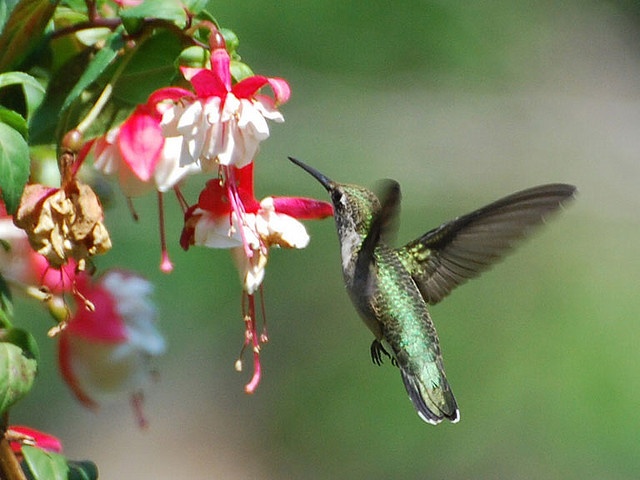
The ways in which certain animals and plants interact have evolved in some cases to make them interdependent for nutrition, respiration, reproduction, or other aspects of survival.

Ecology represents the organized body of knowledge that deals with the relationships between living organisms and their nonliving environments. Increasingly, the realm of ecology involves a systematic analysis of plant-animal interactions through the considerations of nutrient flow in food chains and food webs, exchange of such important gases as oxygen and carbon dioxide between plants and animals, and strategies of mutual survival between plant and animal species through the processes of pollination and seed dispersal.

A major example of animal-plant interactions involve the continual processes of photosynthesis and cellular respiration. Green plants are classified as ecological producers, having the unique ability, by photosynthesis, to take carbon dioxide and incorporate it into organic molecules.

Biochemical Coevolution in Angiosperms

Biochemical Coevolution in Angiosperms

Flowering plants, or angiosperms, produce many compounds that are not directly related to growth and development. These secondary metabolites arise from primary metabolic pathways and act as antiherbivory mechanisms, allelochemicals, or attractants.

Secondary metabolites are biochemicals produced by plants in response to selection pressures. These pressures may be from herbivory, competition, or the need for pollination.

As plants produce compounds to enhance their survival, predators, competitors, and pollinators react and evolve means of adjusting to the plant’s efforts. Chemically simple secondary metabolites may be widespread throughout angiosperm (flowering plant) families, whereas more complex chemicals are often restricted to a single species.

Community - Ecosystem Interactions

Community, ecosystem Interactions

Ecosystems are complex organizations of living and nonliving components. They are frequently named for their dominant biotic or physical features (such as marine kelp beds or coniferous forests).

Communities are groups of species usually classified according to their most prominent members (such as grassland communities or shrub communities). The interactions between species and their ecosystems have lasting impacts on both.

In an ecological sense, a community consists of all populations residing in a particular area. Examples of communities range in scale from all the trees in a given watershed, all soil microbes on an agricultural plot, or all phytoplankton in a particular harbor to all plants, animals, and microbes in vast areas, such as the Amazon basin or the Chesapeake Bay.

Endophytes

Endophytes
Endophytes

Fungi that spend at least a part of their lives within the above ground parts of living plants—in leaves, stems, and in some cases reproductive organs—but cause no outward signs of infection are called endophytes. Some endophytes protect the host plant by deterring grazing animals or pathogenic fungi.

In the 1980’s scientists began to realize that a great variety of microscopic fungal species live benignly within plants, as endophytes (from the Greek words endos, meaning “inside,” and phyton, for “plant”), in contrast to fungi living on the surfaces of plants, as epiphytes (from the Greek epi, meaning “upon,” plus phyton). Most endophytic fungi are ascomycetes. Many appear to be close relatives of plant pathogens.

Most endophytic fungi live and feed between the host plant’s cells. Those endophytes that provide a benefit to the plant in return for their keep are considered to be partners with their host, in a symbiotic relationship called mutualism. Endophytic mutualism is well developed in some grasses, in which the fungal partner produces alkaloid substances that deter herbivores and pathogens.

Human Population Growth

Human Population Growth

Since the Industrial Revolution of the nineteenth century, human populations have experienced a period of explosive growth. Overpopulation now poses a real threat to plant lives, ecosystems, and the long-term sustainability of the earth’s current ecological balance.

Just eleven thousand years ago, there were only about five million humans who lived on the planet Earth. The initial population growth was slow, largely because of the way humans lived—by hunting. Such a mobile lifestyle limited the size of families for practical reasons.

When simple means of birth control, often abstention from sex, failed, a woman would elect abortion or, more commonly, infanticide to limit her family size. Furthermore, a high mortality rate among the very young, the old, the ill, and the disabled acted as a natural barrier to rapid population growth.

Nastic Movements

Nastic movements
Nastic movements

Plants, unlike animals, are sedentary organisms, but they are capable of some limited movements. These include nastic movements, which enable plants to adapt rapidly to changes in their environment by changing orientation.

Nastic movements and tropisms, or growth movements, are two important, but different, kinds of movements in plants. In nastic movements, the direction of movement is determined by the anatomy of the plant rather than by the position of the origin of the stimulus.

In tropisms, the movement is in a direction either toward or away from the origin of the stimulus. In addition, the orientational changes that occur in nastic movements are temporary; they are reversible and repeatable. The tropisms, in contrast, are generally irreversible.

Pigments in Plants

Pigments in plants
Pigments in plants

Photosynthetic pigments color plants and participate in photosynthesis. Other plant pigments are important in flowers and fruits to attract pollinators and seed dispersers. Humans use plant pigments in vitamins and dyes.

Plant pigments can be classified as either nitrogenous or non-nitrogenous, that is, either nitrogen-containing or non-nitrogen-containing.

Non-nitrogenous pigments

Non-nitrogenous forms are widely distributed and include the carotenoids and the quinones. Carotenoids are yellow, orange, or red pigments often involved as accessory pigments in photosynthesis. They are insoluble in water but soluble in a variety of nonpolar solvents. They are easily bleached by light or oxygen.

Rangeland

Rangeland
Rangeland

Open land of a wide variety of types, including grasslands, shrublands, marshes, and meadows as well as some desert and alpine land, is known as rangeland.

Rangeland is a valuable and resilient ecosystem resource that supports considerable plant and animal life. Rangeland generally refers to a kind of land rather than a use of that land.

The Society for Range Management defines rangelands as “land on which the native vegetation (climax or natural potential) is predominantly grasses, grass-like plants, forbs, or shrubs.” Rangeland “includes lands revegetated naturally or artificially”as well as “natural grasslands, savannas, shrublands, most deserts, tundra, alpine communities, coastal marshes and wet meadows.”