Showing posts with label microorganisms. Show all posts

Algae

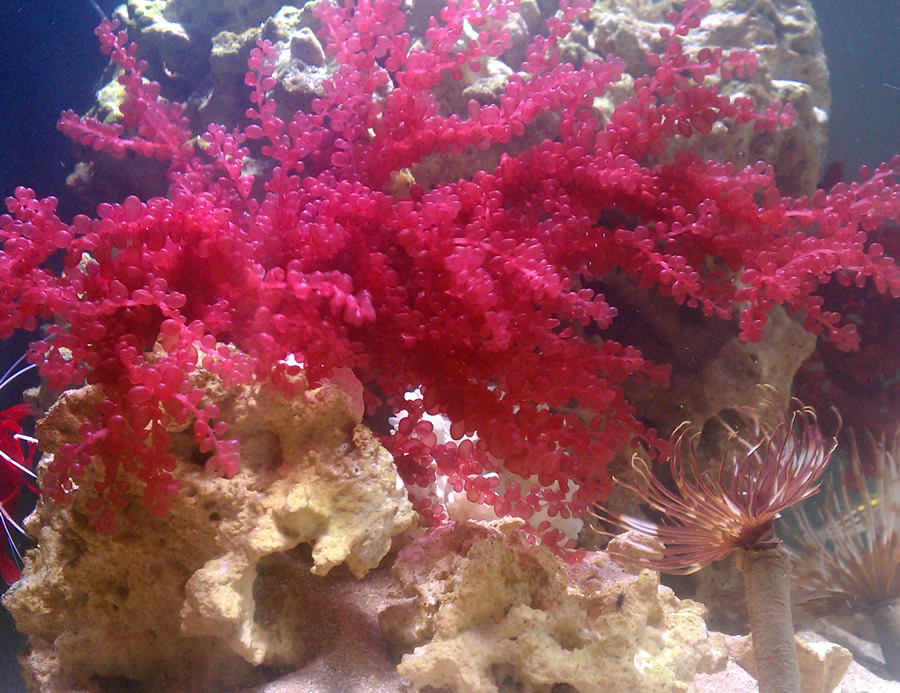
Red algae
Red algae

Algae comprise a diverse group of (with few exceptions) photosynthetic oxygen-producing organisms, ranging in size from microscopic single cells to gigantic seaweeds.

The study of algae is known as phycology (in Greek, phycos means "algae"). Currently, most authors place eukaryotic algae in the kingdom Protista (domain Eukarya) and prokaryotic algae in the domain Bacteria.

In the past algae were considered to be lower plants because some forms look like plants. As in plants, the primary photosynthetic pigment in algae is chlorophyll a, and oxygen is produced during photosynthesis.

Anaerobes and Heterotrophs

Anaerobes
Anaerobes

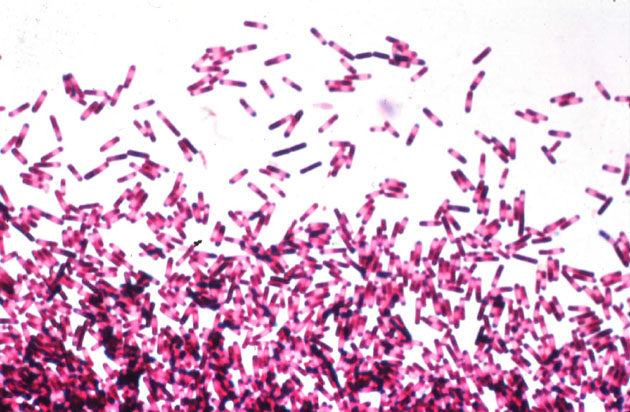
The first organisms to evolve on the earth are thought to have been heterotrophs and anerobes. Heterotrophs are organisms that cannot produce their own food but must fill their energy requirements by consuming organic molecules produced by other processes or organisms. Anaerobes are organisms that do not require free oxygen gas in order to survive; for some anaerobes, free oxygen may be poisonous.

Heterotrophs include many familiar organisms (such as animals) whose existence is tied to primary producers, those organisms that create energy-storing molecules, such as photosynthesizing plants. Anaerobes also are common, though less apparent. Typically, they are microscopic organisms restricted to living in a few surface environments where oxygen is absent.

It may seem strange, then, that these organisms were perhaps the first organisms to have evolved on the earth. Yet the combination of the heterotrophic lifestyle and the anaerobic life requirement is consistent with what is known about the conditions of the early earth’s surface environment.

Ascomycetes

Aleuria aurantia. The Orange Peel Fungus is a widespread ascomycete fungus in the order Pezizales. The brilliant orange, cup-shaped ascocarps often resemble orange peels strewn on the ground, giving this species its common name.
Ascomycetes

The ascomycetes are fungi (phylum Ascomycota or Ascomycotina) that produce sexual spores in a specialized cell called an ascus. These diverse fungi, with more than thirty thousand species, can be found in almost every ecosystem worldwide. One of the most famous members of the ascomycetes is the truffle.

Ascomycetes, one of the four phyla of the fungus kingdom, by definition possess an ascus, a single cell inside of which sexual spores are produced.

The reproductive process has been well documented and occurs when the dikaryotic mycelium (the mass of hyphae forming the body) undergoes changes that precede the formation of the ascus. Dikaryotic is the genetic state in which two haploid nuclei are present in the cell. One nucleus is donated by each parent.

Bacterial Genetics

Bacterial Genetics
Bacterial Genetics

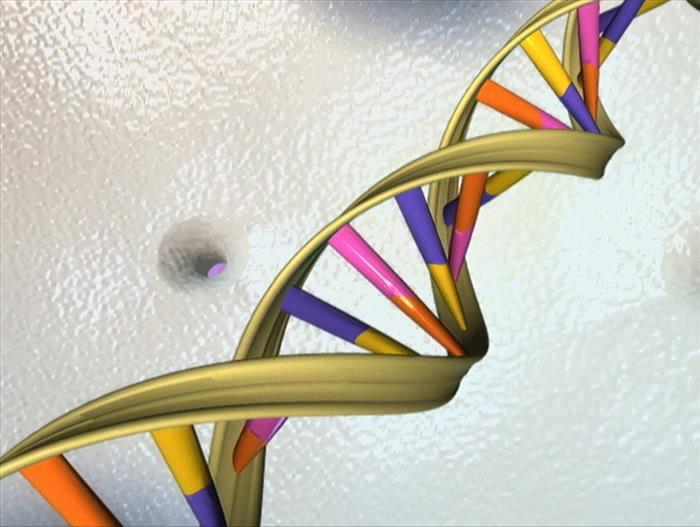
Bacterial genetics is the study of the genetic material of bacterial DNA, which can provide valuable insights into the process of mutation because of bacteria’s rapid rate of reproduction.

Plants were the original candidates for genetic studies, which began in the late 1800’s. Studies with animals soon followed; bacteria did not become candidates for such study until the mid-1940’s, when adequate technology for handling bacteria developed. Bacteria have become extremely useful organisms for genetic studies since the early 1950’s.

Two major features of bacteria make them desirable subjects. First, bacterial cells typically divide every twenty minutes. Their rapid rate of reproduction allows a very large number of bacteria to be produced in a short time. This, in turn, provides the researcher with more opportunity to detect the "rare genetic events" of mutation or recombination.

Bacteriophages

Bacteriophages
Bacteriophages

Viruses that attack bacterial cells are known as bacteriophages. Many results gained from studying bacteriophages have universal implications.

For example, the physical properties of DNA and RNA are remarkably identical in all organisms, and these are perhaps easiest to study in bacteriophage systems.

Bacteriophages, or phages for short, are viruses that parasitize bacteria. Viruses are an extra ordinarily diverse group of ultramicroscopic particles, distinct from all other organisms because of their noncellular organization.

Basidioporic Fungi

Basidioporic Fungi
Basidioporic Fungi

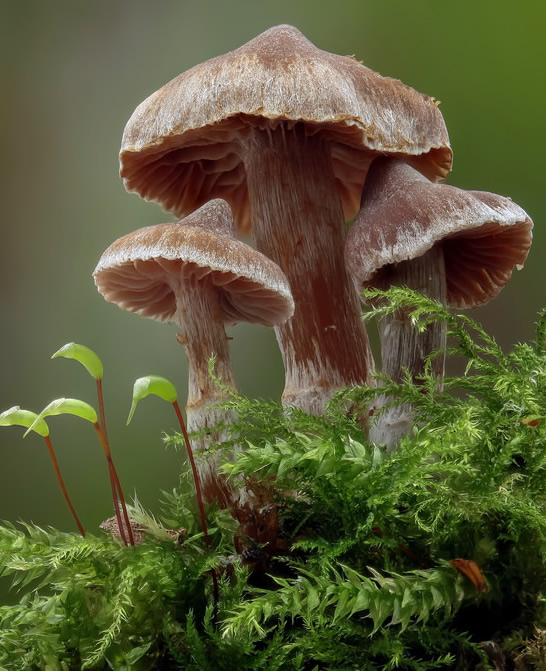
Basidiosporic fungi (also known as the Basidiomycota or Basidiomycotina) are fungi that produce sexual spores on a specialized cell called a basidium.

The basidiosporic fungi are the most diverse phylum of the fungi world, with more than 22,300 species described. Some of the fungi in this phylum are microscopic, while the larger members of this group produce fruiting structures that are basketball-sized and weigh in excess of 10 pounds.

This phylum contains fungi that fall into three classes: mushroom, rusts, and smuts—and range widely in appearance, from the common mushroom to weblike fungi with an odor that can be detected at several feet.

Biological Weapons

Biological Weapons
Biological Weapons
Biological weapons are biological agents that can be used to destroy living organisms. This general definition includes the use of virtually any kind of microorganism (bacterium or fungus) or biological agent (mycoplasma like organism, virus, viroid, or prion) to destroy any biologically important plant or animal.

There are two basic ways of using biological weapons against humanity. The first is to attack the food or water supply. This would produce hardship and the possible death from starvation of many individuals. In developed countries such as the United States, total devastation due to such an attack would likely be avoided, as there are considerable stores of food, in dispersed locations, that would mitigate against crop failure of moderate proportions.

In addition, most experts agree that the amount of biological contaminant required to overcome the effects of dilution and time in most water reservoirs makes poisoning of water supplies impractical, although not impossible.

The other way of using biological weapons against humanity is to attack individuals directly, using pathogens. Numerous known pathogens could be used, but the most effective biological weapons would creep upon the population with stealth. Naturally occurring agents that have promise as biological weapons are pathogens, which can infect and colonize a host. A pathogen causes disease, an alteration in the metabolism of a host.

Biopesticides

Biopesticides
Biopesticides
Biopesticides are biological agents, such as viruses, bacteria, fungi, mites, and other organisms used to control insect and weed pests in an environmentally and ecologically friendly manner.

Biopesticides allow biologically based, rather than chemically based, control of pests. A pest is any unwanted animal, plant, or microorganism. When the environment provides no natural resistance to a pest and when no natural antagonists are present, pests can run rampant.

For example, spread of the fungus Endothia parasitica, which entered New York in 1904, caused the nearly complete destruction of the American chestnut tree because no natural control was present. Viruses, bacteria, fungi, protozoa, mites, insects, and flowers have all been used as biopesticides.

Advantages of Biopesticides

Many plants and animals are protected from pests by passive means. For example, plant rotation is a traditional method of insect and disease protection that is achieved by removing the host plant long enough to reduce a region’s pathogen and pest populations.

Cellular Slime Molds

Cellular Slime Molds

Cellular slime molds, or dictyostelids, were originally considered to be fungi. These microscopic, multicellular organisms are easily mistaken for some of the microfungi that commonly occur as contaminants in laboratory cultures. However, cellular slime molds are more closely related to the protozoans than to fungi.

Although once thought to be fungi, the protists of the phylum Dictyosteliomycota actually have more in common with the paramecium or amoeba that can be observed in a drop of pond water when viewed under the microscope than they do with mushrooms and toadstools.

Cellular slime molds are essentially microscopic throughout their entire life cycle, and only rarely can they be observed directly in nature, as is the case for the plasmodial slime molds. Cellular slime molds must therefore be grown under controlled laboratory conditions in order to be studied.

Charophyceae

Spirogyra
Spirogyra

It is almost impossible not to see Spirogyra floating on the surface of a pond on a hot summer day, but most people dismiss it as pond scum. Few realize that what they are looking at is a member of the Charophyceae, a class in the phylum Chlorophyta, or green algae, and a cousin of the ancestor of the Embryophyta, or bryophytes and vascular plants.

Most Charophyceae, like Spirogyra, live in freshwater habitats, but some also occur in moist soil in terrestrial habitats. Charophyceae can live as single cells, colonies, or branched and unbranched filaments and come in a variety of shapes.

The characteristics that unite members of the class—and which link them with the embryophytes—include flagellated cells (similar to sperm cells in vascular plants), a nuclear envelope that breaks down during mitosis, mitotic spindles that persist as phragmoplasts (a type of cytoskeletal scaffolding) through cell division either by furrowing or by forming a cell plate, the presence of chlorophylls a and b and phytochrome, and the storage of starch inside plastids.

Chemotaxis

Chemotaxis

Chemotaxis is the ability of a cell to detect certain chemicals and to respond by movement, such as microbial movement toward nutrients in the environment.

Many microorganisms possess the ability to move toward a chemical environment favorable for growth. They will move toward a region that is rich in nutrients and other growth factors and away from chemical irritants that might damage them. Among the organisms that display this chemotactic behavior, none is simpler than bacteria.

Bacteria are single-celled prokaryotic microorganisms, which means that their deoxyribonucleic acid (DNA) is not contained within a well-defined nucleus surrounded by a nuclear membrane, as in eukaryotic (plant and animal) cells.

Chlorophyceae

Chlorophyceae

Chlorophyceae (from the Greek word chloros, meaning “green”) make up an extremely large and important class of green algae. Members may be unicellular, colonial, or filamentous. Cells of unicellular and colonial chlorophyceans may have two or more flagella.

There are about 2,650 living species of chlorophyceans. The main features of the class (and most plants) are the use of starch as the principal food reserve and the green chloroplasts with chlorophylls a and b. In spite of plant characteristics, this algal group is not directly related to early land plants.

Chlorophyceans are almost entirely restricted to freshwater and terrestrial habitats. Some members of this class have adapted to life on snow as snow algae. Snow algae cause snow to appear red-burgundy or orange in color because of high levels of unusual carotenoid pigments within the algal cells.

Chrysophytes

Chrysophytes

The Chrysophyceae, classified within the kingdom Chromista, are mostly unicellular or colonial organisms found in fresh and salt water throughout the world.

The Chrysophyceae (in some systems corresponding to the phylum Chrysophyta) are related to heterokont algae and include more than eight hundred described species that are classified in approximately one hundred genera.

They aremost closely related to the Synurophyceae and other pigmented heterokont algae, including the Bacillariophyceae (diatoms), Eustigmatophyceae, Phaeophyceae (brown algae), and Xanthophyceae (yellow-green algae), among others.

Cryptomonads

Cryptomonads
Cryptomonads

The phylum Cryptophyta describes tiny, motile, unicellular organisms with two slightly unequal flagella bearing lateral hairs. Cryptomonads live mainly in marine and freshwater environments.

Some cryptomonads are alga-like, with bluegreen, red, and olive-brown photosynthetic pigments including chlorophylls a, c2, alpha-carotene, xanthophylls (alloxanthin, crocoxanthin, zeaxanthin, and monadoxanthin), and phycobiliproteins (phycoerythrin and phycocyanin).

Cryptomonads are found in a variety of moist places, such as algal blooms in the ocean or in fresh water, and on beaches. Some members are intestinal parasites in animals.

Diatoms

Diatoms
Diatoms

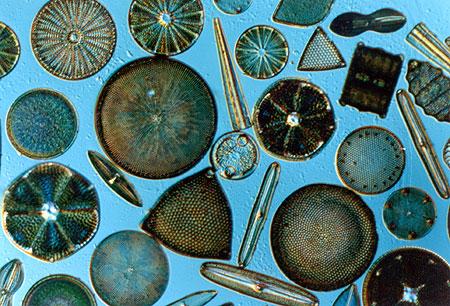
Diatoms are unicellular microorganisms of the phylum Bacillariophyta that are abundant in aquatic, semi aquatic, and moist habitats throughout the world, growing as solitary cells, chains of cells, or members of colonies.

Diatoms, algal organisms of the phylum Bacillariophyta, have more than 250 genera and about 100,000 species. A distinctive siliceous cell wall called a frustule surrounds each vegetative cell. Diatoms have an extensive fossil record, going back some 100 million years to the Cretaceous period.

Deposits of fossil diatoms, known as diatomite or diatomaceous earth, are mined commercially for use as abrasives and filtering aids. One subterranean marine deposit in Santa Maria, California, is about 900 meters in thickness. More than 270,000 metric tons of diatomaceous earth are quarried annually from a deposit in Lompoc, California.

Dinoflagellates

Dinoflagellates
Dinoflagellates

Dinoflagellates, phylumDinophyta, are unicellular and colonial algal organisms from the kingdom Protista named for the spinning motions that result from the movement of their flagella.

The two thousand to four thousand species that make up the Dinophyta phylum typically have two flagella. Dinokonts (Dinophyceae) have one flagellum running in a groove that cuts transversely across the cell and another flagellum, the sulcus, that runs backward in a longitudinal groove and is more or less perpendicular to the transverse one. In desmokonts (Desmophyceae), both flagella arise from a point at the front of the cell.

The motions of the flagella, which make dinoflagellates spin like a top, help give rise to the name, for dinos in Greek means “whirling,” and flagella means “whip.” Single-celled species are the most common, but colonial species exist. The largest dinoflagellate, Noctiluca, may grow as large as 2 millimeters in diameter.

Endophytes

Endophytes
Endophytes

Fungi that spend at least a part of their lives within the above ground parts of living plants—in leaves, stems, and in some cases reproductive organs—but cause no outward signs of infection are called endophytes. Some endophytes protect the host plant by deterring grazing animals or pathogenic fungi.

In the 1980’s scientists began to realize that a great variety of microscopic fungal species live benignly within plants, as endophytes (from the Greek words endos, meaning “inside,” and phyton, for “plant”), in contrast to fungi living on the surfaces of plants, as epiphytes (from the Greek epi, meaning “upon,” plus phyton). Most endophytic fungi are ascomycetes. Many appear to be close relatives of plant pathogens.

Most endophytic fungi live and feed between the host plant’s cells. Those endophytes that provide a benefit to the plant in return for their keep are considered to be partners with their host, in a symbiotic relationship called mutualism. Endophytic mutualism is well developed in some grasses, in which the fungal partner produces alkaloid substances that deter herbivores and pathogens.

Euglenoids

Euglenoids
Euglenoids

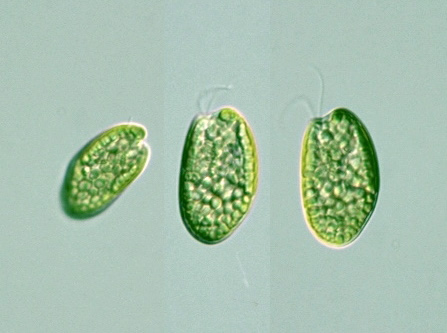
Organisms called euglenoids, the algal phylum Euglenophyta in the kingdom Protista, make up a large group of common microorganisms numbering between 750 and 900 known species.

Euglenoids can be found in both fresh and stagnant water. Some genera of euglenoids can also be found in marine habitats. Euglena and Phacus are representative common genera. Euglenoids are unicellular, except for those of the colonial genus Colacium.

Because euglenoids have flexible cell coverings, move about freely, and ingest their food through a structure called a gullet, many scientists have classified the euglenoids as animals. Some species of euglenoids, however, have chloroplasts and are able to supply at least some of their food needs through photosynthesis.

Flagella and Cilia

Flagella and Cilia
Flagella and Cilia
Flagella and cilia are hairlike structures,made primarily of protein, found on the surfaces of cells and used for movement by microorganisms and some specialized cells, such as the gametes of certain plants with motile sperm. Because flagella and cilia are so similar, many scientists use the term “undulipodia” for both in reference to eukaryotic organisms.

Although the term “flagellum” is used in reference to both prokaryotes (archaea and bacteria) and eukaryotes (fungi, protists, plants, and animals), the structure and mechanism of action of this structure in prokaryotes are quite different from the structure and mechanism of action in eukaryotes.

Eukaryotic flagella and cilia, however, are structurally and functionally identical. The differences between them are in their number, length, and position. Flagella are less numerous, longer, and usually polar, while cilia are more numerous and shorter, covering much of the cell’s surface.

Heterokonts

Heterokonts
Heterokonts

Heterokonts are a group of closely related phyla with flagella in pairs, one long and one short. They include oomycetes, chrysophytes, diatoms, and brown algae.

The term “heterokont” refers either to the flagellar arrangement of biflagellate cells in which the two flagella differ in length (as in anisokonts), type of motion, or ornamentation, or to those organisms (and organisms evolutionarily derived from such lineages) in which biflagellate cells with heterokont flagella are produced at some point during their life cycle.

The most common heterokont flagellar arrangement consists of a posteriorly directed whiplash flagellum and an anteriorly directed tinsel flagellum. The tubular tinsel flagellum characteristically bears two rows of stiff, glycoproteinaceous, tripartite hairs previously referred to as mastigonemes but now increasingly referred to as stramenopili. Such organisms are often referred to as stramenopiles.