Showing posts with label medicine and health. Show all posts

Angiosperms

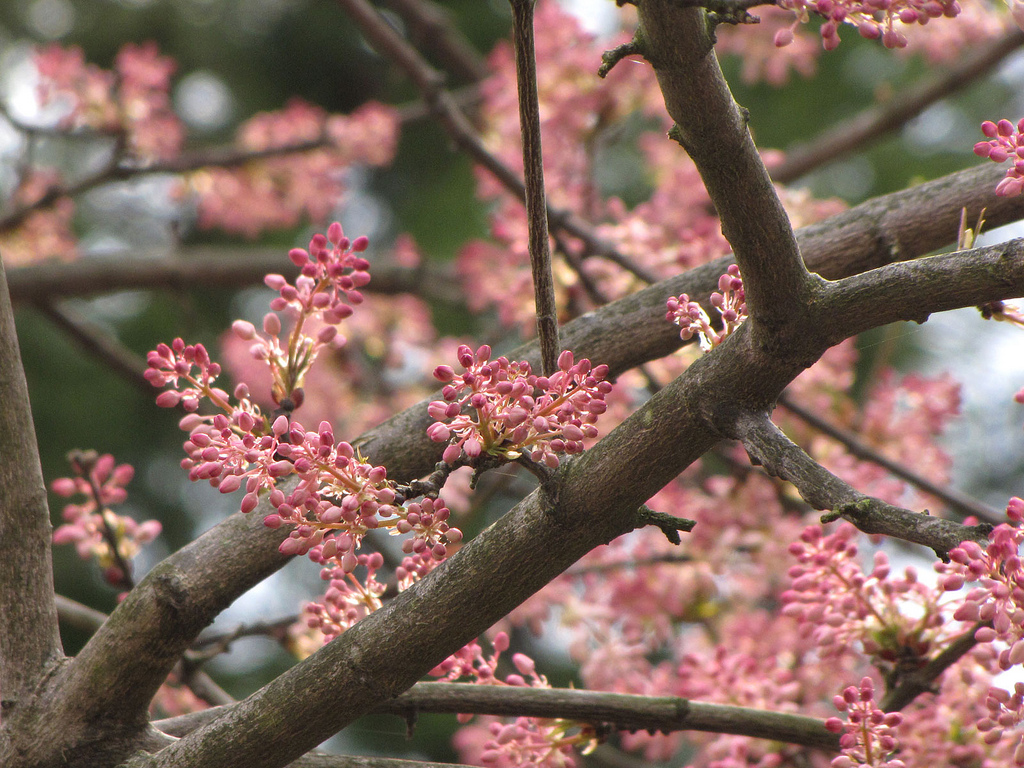
Angiosperms - Chinese Bladdernut Buds

The name "angiosperms" has long been used by botanists to refer to the flowering plants, a group of approximately 235,000 species. All angiosperms are members of the phylum Anthophyta.

The name "angiosperm" is actually derived from two Greekwords, angeion,meaning "vessel" or "container", and sperma, meaning "seed". The name was given in reference to the fact that the seeds of all flowering plants develop from ovules that are enclosed in a structure called a carpel.

This characteristic sets the angiosperms apart from all other plants, which either do not have seeds or have seeds that are not developed in structures resembling a carpel. Although the name angiosperm is used widely, plant taxonomists and many botanists typically refer to them by the more formal name Anthophyta, the phylum that contains the flowering plants.

Biological Weapons

Biological Weapons
Biological Weapons
Biological weapons are biological agents that can be used to destroy living organisms. This general definition includes the use of virtually any kind of microorganism (bacterium or fungus) or biological agent (mycoplasma like organism, virus, viroid, or prion) to destroy any biologically important plant or animal.

There are two basic ways of using biological weapons against humanity. The first is to attack the food or water supply. This would produce hardship and the possible death from starvation of many individuals. In developed countries such as the United States, total devastation due to such an attack would likely be avoided, as there are considerable stores of food, in dispersed locations, that would mitigate against crop failure of moderate proportions.

In addition, most experts agree that the amount of biological contaminant required to overcome the effects of dilution and time in most water reservoirs makes poisoning of water supplies impractical, although not impossible.

The other way of using biological weapons against humanity is to attack individuals directly, using pathogens. Numerous known pathogens could be used, but the most effective biological weapons would creep upon the population with stealth. Naturally occurring agents that have promise as biological weapons are pathogens, which can infect and colonize a host. A pathogen causes disease, an alteration in the metabolism of a host.

Culturally Significant Plants

Culturally Significant Plants

Plants are often used as a tool for ceremonial purposes, as artistic media to express indigenous traditions, or as herbal remedies or hallucinogenics to fulfill cultural needs and expectations. Culturally significant plants grow on all continents and are used by all ethnicities.

Historically, humans have appropriated plants for numerous cultural applications. Since prehistoric times, plants have served as symbolic organisms to represent aspects of the life cycle and seasonal changes, to worship, and to make offerings to gods. Plants were incorporated into mythology and legends to show their meanings to various cultures.

Ethnobotany

American Indians are an example of a historic ethnic group which selected specific plant species for cultural uses, such as rituals and ceremonies.

Estrogens From Plants

Estrogens From Plants

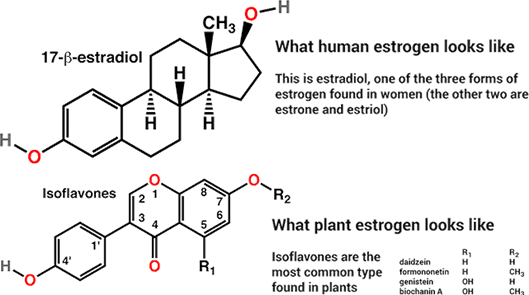
While the female hormones called estrogens are common in mammals, only a few plants contain estrogens. Others synthesize compounds which are chemically unrelated to estrogens but resemble them in their molecular size and shape. These compounds are called phytoestrogens (plant estrogens) and may, when ingested by animals or humans, have properties similar to those of mammalian estrogens.

The precursor of estrogens in plants and animals is the linear (straight-chain) triterpene known as squalene. Cyclization of squalene, via the intermediate cycloartenol in plants and via the intermediate lanosterol in animals, forms a group of very important compounds known as the steroids.

Steroids include cholesterol, mammalian sex hormones (including the estrogens and androgens), corticosteroids, insects’ molting hormones, and plant brassinosteroid hormones.

Herbs

Herbs
Herbs

The term “herb” has a variety of meanings but is most frequently used in one of three ways. To a botanist, an herb is a plant with a soft, flexible stem and a life cycle that is completed in one growing season. A person interested in medicinal plants would use the word “herb” to describe any plant with medicinal properties. In a culinary situation, an herb is a plant used to impart flavor to food.

Herb or Spice?

Herbs and spices are both used in cooking to modify the taste and smell of food. A clear distinction between herbs and spices is difficult to draw, but there are some broad differences that are useful to know.

Plants referred to as herbs, such as basil (Ocimum basilicum) or rosemary (Rosmarinus officinalis), typically have been used in temperate regions throughout much of recorded history.

Liverworts

Liverworts
Liverworts

Liverworts (phylum Hepatophyta) are one of three ancient lines of bryophytes (liverworts, hornworts, and mosses): low-growing land plants that depend on free water (rain) for fertilization.

Liverworts, with about six thousand species, generally prefer somewhat cooler, moister, shadier, and more acidic habitats than mosses. Like any bryophyte, a liverwort has a dominant (conspicuous) green gametophyte and a small, attached sporophyte, which is a single-stalked sporangium that developed from a fertilized egg.

As in hornworts, liverwort gametophytes are typically dorsiventrally symmetrical (flattened). A unique feature of liverworts is the presence, in the gametophyte, of oil bodies, cellular organelles that produce aromatic terpenoids.

Medicinal Plants

Medicinal plant
Medicinal plant

Because plants are so biochemically diverse, they produce thousands of substances commonly referred to as secondary metabolites. Many of these secondary metabolites have medicinal properties that have proven to be beneficial to humankind.

The use of plants for medicinal purposes predates recorded history. Primitive people’s use of trial and error in their constant search for edible plants led them to discover plants containing substances that cause appetite suppression, stimulation, hallucinations, or other effects. Written records show that drugs such as opium have been in use for more than five thousand years.

From antiquity until fairly recent times, most physicianswere also botanists or at least herbalists. Because modern commercial medicines are marketed in neat packages, most people do not realize that many of these drugs were first extracted from plants.

Paclitaxel

Paclitaxel
Paclitaxel

Also known by the brand name Taxol, paclitaxel is a potent cancer-fighting drug originally derived from the bark of the Pacific yew tree, a small- to medium-sized understory tree that occupies Pacific coastal forests from southwestern Alaska to California.

Development of paclitaxel as a drug began in 1962 with the collection in Washington State of the reddish-purple bark of the Pacific yew tree (Taxus brevifolia nutt) by Kurt Blum, then a technician with the National Cancer Institute (NCI). The NCI was employing a “shotgun” approach to cancer research: A wide variety of plant parts of various species were being screened for anticancer activity.

Thereafter, several scientists, including Monroe Wall and M. C. Wani at Research Triangle Institute in North Carolina and Susan Horwitz and Peter Schiff of the Albert Einstein College of Medicine in New York, recognized the potential of paclitaxel and became intensely interested.

Poisonous and Noxious Plants

Poisonous plants
Poisonous plants

Poisonous plants have evolved toxic substances that function to defend them against herbivores and thereby better adapt them for survival.

After evolving adaptations that facilitated colonization of terrestrial habitats, plants were confronted with a different type of problem.

This was the problem of herbivory, or the inclination of many different types of organisms, from bacteria to insects to four-legged herbivores, to eat plants. Pressures from herbivory drove many different types of plants, from many different families, to evolve defenses.

Viruses and Viroids

Viroid
Viroid

Viruses are extremely small parasites that have none of the structures characteristic of living cells. Many viruses are little more than a protein-coated and particle-containing DNA or RNA.

The protein coat is specifically adapted for breaching the plasma membranes of host organisms. Viroids are even simpler parasites comprising small, single-stranded molecules of RNA with no protein coat. They are the smallest known agents of infectious disease.

The concept of a virus dates back to the late nineteenth century investigations of the mosaic disease of tobacco by Dmitri Iosifovich Ivanovsky in Russia and Martinus Willem Beijerinck in Holland.