Showing posts with label history of plant science. Show all posts

Agricultural Revolution

Agricultural Revolution

The agricultural revolution marked the transition by humans from hunting and gathering all their food to domesticating plants for food.

People first obtained their food by scavenging kills made by other animals, by hunting animals, and by gathering wild food plants. Between ten thousand and twelve thousand years ago, people began to use plants in new ways. Some scientists and historians call this period of time the "agricultural revolution".

Agricultural Beginnings

Before the 1960’s,many scientists and historians believed that hunter-gatherers abruptly switched from foraging to farming. Those who thought that agriculture arose quickly coined the term "agricultural revolution".

Biotechnology

Biotechnology
Biotechnology

Biotechnology is the use of living organisms, or substances obtained from those organisms, to produce processes or products of value to humanity, such as foods, high-yield crops, and medicines.

Modern biotechnological advances have provided the ability to tap into a natural resource, the world gene pool, with such great potential that its full magnitude is only beginning to be appreciated.

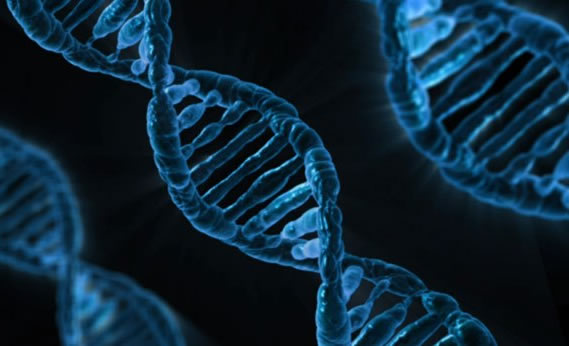
Theoretically, it should be possible to transfer one or more genes from any organism in the world into any other organism. Because genes ultimately control how any organism functions, gene transfer can have a dramatic impact on agricultural resources and human health in the future.

Botany

Botany

Botany is a very old branch of science that began with early people’s interest in the plants around them. Plant science now extends from that interest to cutting-edge biotechnology. Any topic dealing with plants, from the level of their cellular biology to the level of their economic production, is considered part of the field of botany.

History and Subdisciplines

The origins of this branch of biology are rooted in human beings’ attempts to improve their lot by raising better food crops around 5000 b.c.e. This practical effort developed into intellectual curiosity about plants in general, and the science of botany was born.

Some of the earliest botanical records are included with the writings of Greek philosophers, who were often physicians and who used plant materials as curative agents. In the second century b.c.e. Aristotle had a botanical garden and an associated library.

Cell Theory


The notion that the cell is the smallest division of life and its attendant principles have been developed over the past three centuries and are collectively known as the cell theory.

Before the invention of the microscope, people studying living organisms saw whole and complete organisms and did not imagine that life was subdivided into smaller compartments. It is now known that the cell is the fundamental unit of life and that all living organisms are composed of cells. Because cells are microscopic, their existence was not discovered until the seventeenth century.

Discovery of the Cell

The discovery of the cell did not come about until the last half of the seventeenth century, after the Dutch inventor Antoni van Leeuwenhoek built the first light microscope. When looking at pond water using his light microscope in 1674, Leeuwenhoek saw many tiny creatures which were invisible to the naked eye. Leeuwenhoek assumed that these tiny “animalcules” were alive because he could see them moving.

Ecosystems: Studies

Studies ecosystems
Studies ecosystems

The study of ecosystems defines a specific area of the earth and the attendant interactions among organisms and the physical-chemical environment present at the site.

Ecosystems are viewed by ecologists as basic units of the biosphere, much as cells are considered by biologists to be the basic units of an organism. Ecosystems are self-organized and self-regulating entities within which energy flows and resources are cycled in a coordinated, interdependent manner to sustain life.

Disruptions and perturbations to, or within, the unit’s organization or processes may reduce the quality of life there or cause its demise. Ecosystem boundaries are usually defined by the research or management questions being asked.

Genetics: Mendelian

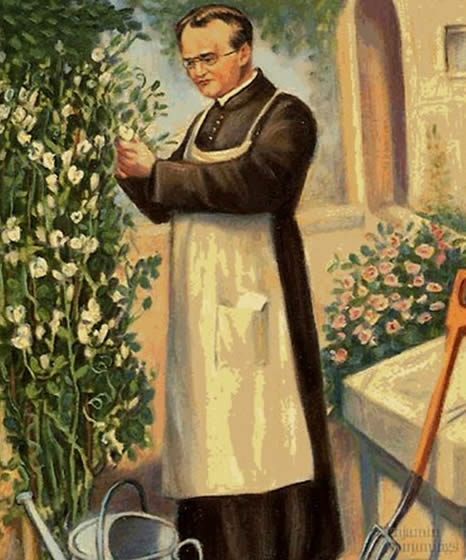
Gregor Mendel (1822-1884)

Mendelian genetics is the classical mechanistic explanation of heredity in sexually reproducing organisms. It explains how genetic information is passed from one generation to another.

In 1866 the Augustinian monk Gregor Mendel (1822-1884) published a paper titled “Versuch über Pflanzenhybriden” (Experiments in Plant Hybridisation, 1910), describing the heredity of mutant characteristics of garden peas.

Mendel founded the modern science of genetics with these experiments, because they led him to propose the existence of hereditary factors, now called genes, and rules describing their inheritance, now referred to as Mendel’s laws. The importance of Mendel’s work was not recognized until 1900, sixteen years after his death, when the movements of chromosomes during cell division were carefully studied.

Genetics: Post-Mendelian

Post-Mendelian genetics

Thirty years after the work of Gregor Mendel in the nineteenth century, several rediscoveries of his work in genetics brought his theories to the fore. At about the same time, the discovery of chromosomes, coupled with the earlier knowledge, took genetics in a new direction.

Gregor Mendel (1822-1884) is often considered the founder of the science of genetics. Though his experiments with pea plants became the basis for understanding genetics in all plants and animals, he died unknown. In 1900 three simultaneous “rediscoveries” of Mendel’s studies put his name at the forefront of biology.

With the reintroduction to the world of Mendel’s genetic laws, biologists began to look more closely at genetic phenomena. These researchers used Mendel’s laws as the basis for more in-depth studies of genetics, which led to the modern understanding of genes, chromosomes, and their inheritance.

Green Revolution

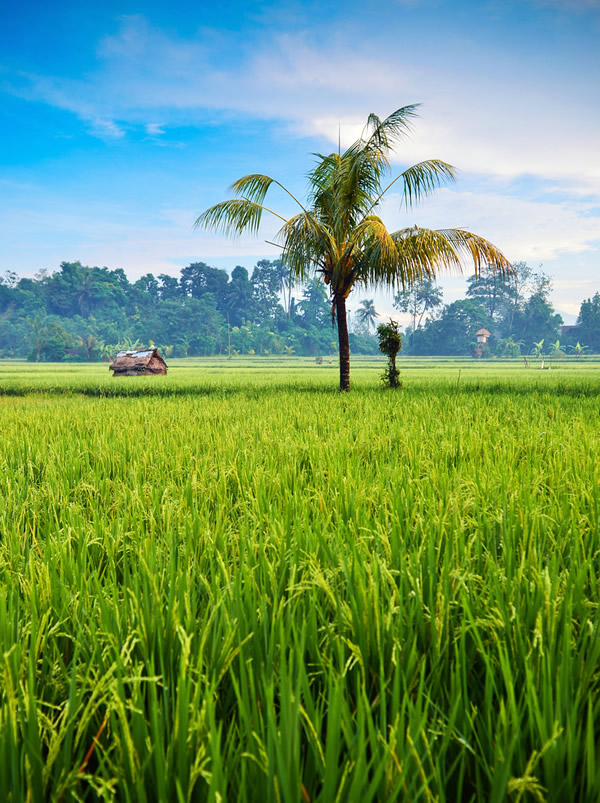
Green revolution - paddy field in Indonesia
Green revolution

The Green Revolution implemented advances in agricultural science to raise food production levels, particularly in developing countries. These advances are associated with the spreading use of high-yield varieties (HYV) of wheat, rice, and corn developed through advanced methods of genetics and plant breeding.

Yield Increases

The Green Revolution can be traced back to a 1940 request from Mexico for technical assistance from the United States to increase wheat production. By 1944, with the financial support of the Rockefeller Foundation, a group of U.S. scientists were researching methods of adapting the new high-yield variety (HYV) wheat that had been successfully used on American farms in the 1930’s to Mexico’s varied environments.

A major breakthrough is attributed to Norman Borlaug, who by the late 1940’s was director of the research in Mexico. For his research and work in the global dissemination of the Mexican HYV wheat, Borlaugwon the 1970 Nobel Peace Prize.