Showing posts with label water-related life. Show all posts

Marine Agriculture

Marine Agriculture
Marine Agriculture

Marine agriculture uses techniques of artificial cultivation, such as growing, managing, and harvesting, and applies them to marine plants and animals. The products are then used for human consumption.

Marine agriculture is also known as mariculture or aquaculture, although aquaculture is a more general term referring to both freshwater and marine farming of organisms. The world’s oceans cover approximately three-fourths of the globe, including vast regions of unexplored life and landforms.

The potential for exploiting the oceans agriculturally is great but currently meets significant obstacles. Because of the expense of equipment and personnel involved, most marine species are not cultivated.

Algae

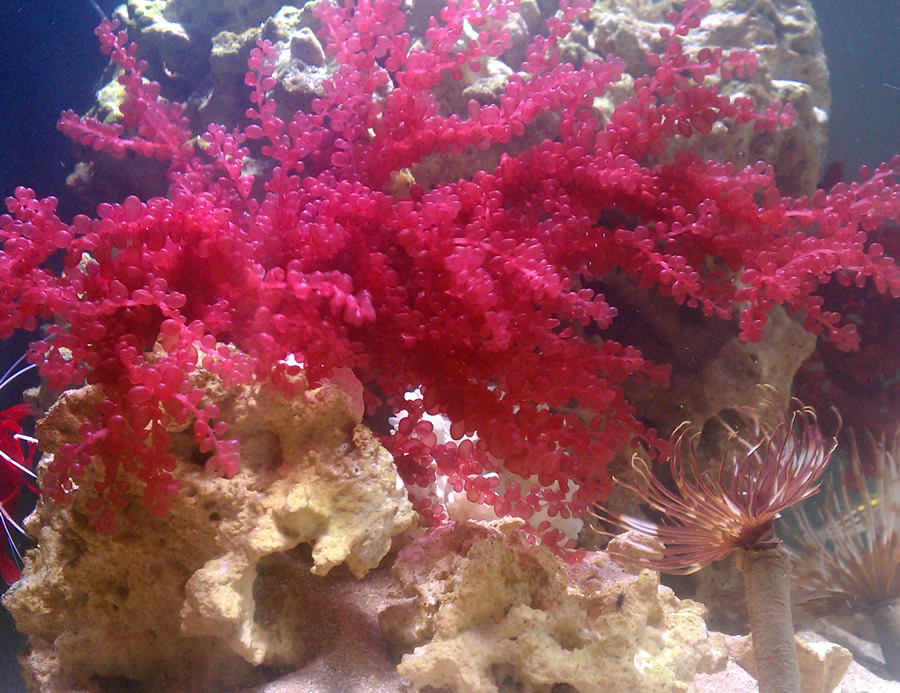
Red algae
Red algae

Algae comprise a diverse group of (with few exceptions) photosynthetic oxygen-producing organisms, ranging in size from microscopic single cells to gigantic seaweeds.

The study of algae is known as phycology (in Greek, phycos means "algae"). Currently, most authors place eukaryotic algae in the kingdom Protista (domain Eukarya) and prokaryotic algae in the domain Bacteria.

In the past algae were considered to be lower plants because some forms look like plants. As in plants, the primary photosynthetic pigment in algae is chlorophyll a, and oxygen is produced during photosynthesis.

Aquatic Plants

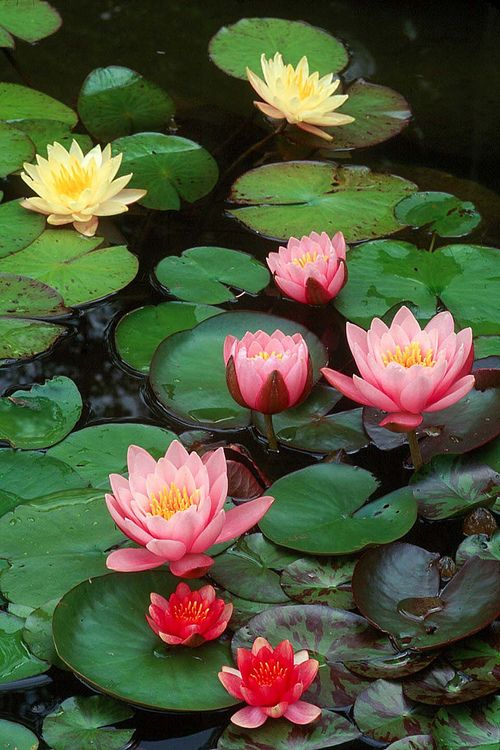
The Lotus flower is a metaphor for Buddhism/a metaphor for life- the muddy swamp is where the Lotus Flower blooms
Aquatics plants - Lotus flower

Aquatic plants are any "true" plants, members of the kingdom Plantae, that are able to thrive and complete their life cycle while in water, on the surface of water, or on hydric soils.

Hydric soils developwhen the ground is flooded or ponded long enough during the growing season to become anaerobic (depleted of oxygen) in the rooting zone. These soils include organic (peats and mucks) and inorganic (mineral) sediments.

Aquatic plants grow in fresh, brackish, and salt water but are most common in fresh water. Their habitats include flowing waters (rivers, streams, brooks), standing waters (lakes, ponds), and wetlands (bogs, fens, marshes, swamps), which are categorized as riverine, lacustrine, and palustrine communities, respectively.

Wetland plants are sometimes referred to as helophytes. Marshes are dominated (that is, more than half covered) by herbaceous species and swamps by woody species. Bog plants are aquatics that grow in acidic organic soils. Fen plants occur in alkaline organic soils.

Bioluminesence

Bioluminesence fungus

Bioluminesence is the production of light by living organisms, including algae and phytoplankton in the oceans and fungi on land.

Bioluminescence is a specific form of chemiluminescence in which the chemical energy that is produced in a chemical reaction is converted into radiant energy. In bioluminescence the reaction originates in a wide variety of living organisms, including a small number of plants. It should not be confused with fluorescence or phosphorescence, both of which do not involve a chemical reaction.

In either of the former cases the energy from a source of light, not from a chemical reaction, is basically absorbed and then re-emitted in some form of another photon. The chemical reactions that lead to bioluminescence release energy in the form of light.

Brown Algae

Brown Algae
Brown Algae

Seaweeds that are brown to olive-green in color belong to the phylum Phaeophyta, or brown algae, which includes between fifteen hundred and two thousand species.

Brown algae (phylum Phaeophyta) are familiar to most people as brown or dark green seaweeds. Some brown algae are microscopic in size, but many are relatively large: One giant kelp measured 710 feet in length. All brown algae are multicellular.

Appearance and Distribution

Brown algae have a body, called a thallus, which is a fairly simple, undifferentiated structure. Some thalli consist of simple branched filaments. Some brown algae have more complex structures called pseudoparenchyma because they superficially resemble the more complex tissues of higher plants.

Cellular Slime Molds

Cellular Slime Molds

Cellular slime molds, or dictyostelids, were originally considered to be fungi. These microscopic, multicellular organisms are easily mistaken for some of the microfungi that commonly occur as contaminants in laboratory cultures. However, cellular slime molds are more closely related to the protozoans than to fungi.

Although once thought to be fungi, the protists of the phylum Dictyosteliomycota actually have more in common with the paramecium or amoeba that can be observed in a drop of pond water when viewed under the microscope than they do with mushrooms and toadstools.

Cellular slime molds are essentially microscopic throughout their entire life cycle, and only rarely can they be observed directly in nature, as is the case for the plasmodial slime molds. Cellular slime molds must therefore be grown under controlled laboratory conditions in order to be studied.

Charophyceae

Spirogyra
Spirogyra

It is almost impossible not to see Spirogyra floating on the surface of a pond on a hot summer day, but most people dismiss it as pond scum. Few realize that what they are looking at is a member of the Charophyceae, a class in the phylum Chlorophyta, or green algae, and a cousin of the ancestor of the Embryophyta, or bryophytes and vascular plants.

Most Charophyceae, like Spirogyra, live in freshwater habitats, but some also occur in moist soil in terrestrial habitats. Charophyceae can live as single cells, colonies, or branched and unbranched filaments and come in a variety of shapes.

The characteristics that unite members of the class—and which link them with the embryophytes—include flagellated cells (similar to sperm cells in vascular plants), a nuclear envelope that breaks down during mitosis, mitotic spindles that persist as phragmoplasts (a type of cytoskeletal scaffolding) through cell division either by furrowing or by forming a cell plate, the presence of chlorophylls a and b and phytochrome, and the storage of starch inside plastids.

Chlorophyceae

Chlorophyceae

Chlorophyceae (from the Greek word chloros, meaning “green”) make up an extremely large and important class of green algae. Members may be unicellular, colonial, or filamentous. Cells of unicellular and colonial chlorophyceans may have two or more flagella.

There are about 2,650 living species of chlorophyceans. The main features of the class (and most plants) are the use of starch as the principal food reserve and the green chloroplasts with chlorophylls a and b. In spite of plant characteristics, this algal group is not directly related to early land plants.

Chlorophyceans are almost entirely restricted to freshwater and terrestrial habitats. Some members of this class have adapted to life on snow as snow algae. Snow algae cause snow to appear red-burgundy or orange in color because of high levels of unusual carotenoid pigments within the algal cells.

Chrysophytes

Chrysophytes

The Chrysophyceae, classified within the kingdom Chromista, are mostly unicellular or colonial organisms found in fresh and salt water throughout the world.

The Chrysophyceae (in some systems corresponding to the phylum Chrysophyta) are related to heterokont algae and include more than eight hundred described species that are classified in approximately one hundred genera.

They aremost closely related to the Synurophyceae and other pigmented heterokont algae, including the Bacillariophyceae (diatoms), Eustigmatophyceae, Phaeophyceae (brown algae), and Xanthophyceae (yellow-green algae), among others.

Chytrids

Chytrids
Chytrids
Chytrids are fungi in the phylum Chytridiomycota. They have motile spores and are primarily aquatic organisms.

Like all fungi, chytrids live in their food and have an absorptive mode of nutrition in which they secrete digestive enzymes and absorb the breakdown products.

Chytrids also have cell walls made of chitin, make the amino acid lysine via the amino adipic acid (AAA) pathway, and possess a ribosomal DNA (deoxyribonucleic acid) sequence that places them more closely with other fungi than with any other group of organisms. The feature that sets the mapart from other fungi is the possession of a motile zoospore. All other fungi produce spores without flagella.

Characteristics

Aposteriorly oriented, whiplash-type flagellum is the feature that unites all the organisms in the division Chytridiomycota within the kingdom Fungi. As absorptive heterotrophs, they live either as saprophytes, growing on dead organic matter, or as parasites in living plants, other fungi, insects, or algae.

Cryptomonads

Cryptomonads
Cryptomonads

The phylum Cryptophyta describes tiny, motile, unicellular organisms with two slightly unequal flagella bearing lateral hairs. Cryptomonads live mainly in marine and freshwater environments.

Some cryptomonads are alga-like, with bluegreen, red, and olive-brown photosynthetic pigments including chlorophylls a, c2, alpha-carotene, xanthophylls (alloxanthin, crocoxanthin, zeaxanthin, and monadoxanthin), and phycobiliproteins (phycoerythrin and phycocyanin).

Cryptomonads are found in a variety of moist places, such as algal blooms in the ocean or in fresh water, and on beaches. Some members are intestinal parasites in animals.

Diatoms

Diatoms
Diatoms

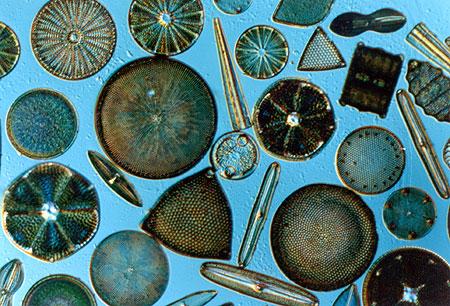
Diatoms are unicellular microorganisms of the phylum Bacillariophyta that are abundant in aquatic, semi aquatic, and moist habitats throughout the world, growing as solitary cells, chains of cells, or members of colonies.

Diatoms, algal organisms of the phylum Bacillariophyta, have more than 250 genera and about 100,000 species. A distinctive siliceous cell wall called a frustule surrounds each vegetative cell. Diatoms have an extensive fossil record, going back some 100 million years to the Cretaceous period.

Deposits of fossil diatoms, known as diatomite or diatomaceous earth, are mined commercially for use as abrasives and filtering aids. One subterranean marine deposit in Santa Maria, California, is about 900 meters in thickness. More than 270,000 metric tons of diatomaceous earth are quarried annually from a deposit in Lompoc, California.

Dinoflagellates

Dinoflagellates
Dinoflagellates

Dinoflagellates, phylumDinophyta, are unicellular and colonial algal organisms from the kingdom Protista named for the spinning motions that result from the movement of their flagella.

The two thousand to four thousand species that make up the Dinophyta phylum typically have two flagella. Dinokonts (Dinophyceae) have one flagellum running in a groove that cuts transversely across the cell and another flagellum, the sulcus, that runs backward in a longitudinal groove and is more or less perpendicular to the transverse one. In desmokonts (Desmophyceae), both flagella arise from a point at the front of the cell.

The motions of the flagella, which make dinoflagellates spin like a top, help give rise to the name, for dinos in Greek means “whirling,” and flagella means “whip.” Single-celled species are the most common, but colonial species exist. The largest dinoflagellate, Noctiluca, may grow as large as 2 millimeters in diameter.

Euglenoids

Euglenoids
Euglenoids

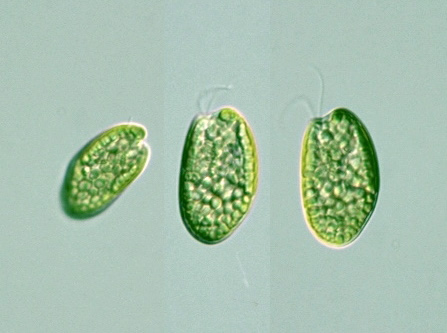
Organisms called euglenoids, the algal phylum Euglenophyta in the kingdom Protista, make up a large group of common microorganisms numbering between 750 and 900 known species.

Euglenoids can be found in both fresh and stagnant water. Some genera of euglenoids can also be found in marine habitats. Euglena and Phacus are representative common genera. Euglenoids are unicellular, except for those of the colonial genus Colacium.

Because euglenoids have flexible cell coverings, move about freely, and ingest their food through a structure called a gullet, many scientists have classified the euglenoids as animals. Some species of euglenoids, however, have chloroplasts and are able to supply at least some of their food needs through photosynthesis.

Green Algae

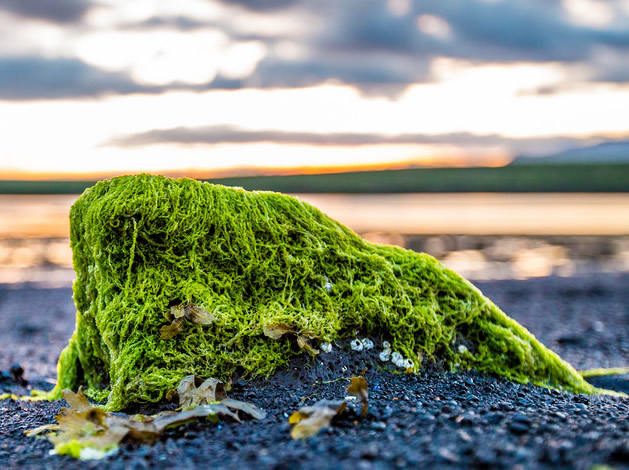
An algae covered rock

The green algae are a diverse group of eukaryotic organisms classified in the phylum Chlorophyta. They are considered eukaryotic because individual cells possess a prominent structural feature known as a nucleus, which houses the chemicals responsible for heredity and metabolic regulation.

The phylum is one of several algal phyla in the kingdom Protista, where algae are grouped based upon pigmentation, carbohydrate storage reserves, and cell wall composition.

Green algae are found in moist soils and fresh-water and saltwater habitats; most are believed to be freshwater-dwelling. The phylum consists of at least eight thousand species. Some estimates place this number at seventeen thousand species. Several shared characteristics support the hypothesis that these organisms and terrestrial plants derived from a common ancestor.

Halophytes

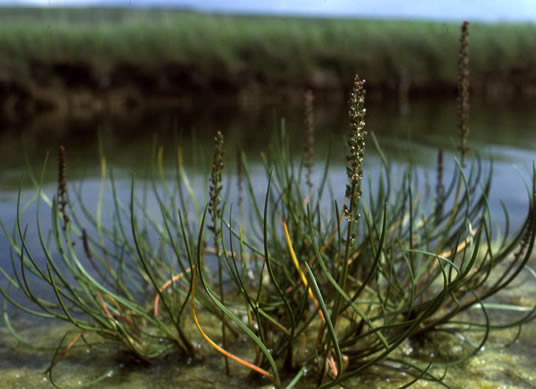
Halophytes: Sea Arrowgrass (Triglochin maritimum)

Halophytes are salt-resistant or salt-tolerant plants that thrive and complete their life cycles in soils or waters containing high salt concentrations. Despite high salt content in the tissues of halophytes, they can be grown and harvested as food or animal fodder.

The Salinity-Plant Relationship

Salts are ionic molecules that typically dissolve in water and split into cations (positively charged ions) and anions (negatively charged ions). Rain dissolves salts from minerals in rocks and soil.

These dissolved salts then either enter surface waters or percolate down to an aquifer. In arid regions where there is low rainfall, water evaporates quickly, leaving its salt load behind, leading to the development of saline soils, salt lakes, and brackish groundwater.

Haptophytes

Haptophytes
Haptophytes

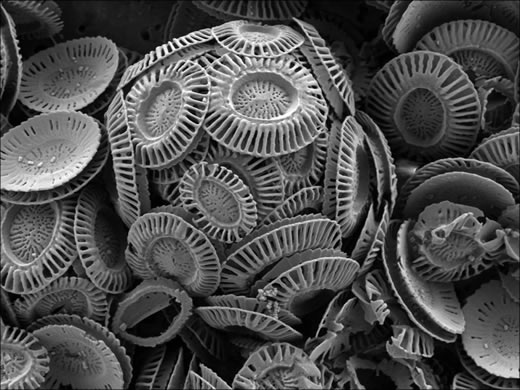
The algal phylum Prymnesiophyta, or Haptophyta, is a monophyletic taxon that contains two hundred to three hundred extant species that are 4-40 microns in size.

The phylum Haptophyta is divided into two subclasses, the Prymnesiophycidae and Pavlovophycidae, that differ significantly from one another. The phylum is usually classified within the kingdom Chromista with other algae containing chlorophyll a and c (excluding dinoflagellates), but their exact relationship to the heterokont algae remains unclear.

Although a few freshwater species are known, most are marine, and species diversity within the phylum is greatest in nutrient-poor waters of the tropical and subtropical open oceans. Most are motile biflagellate single cells or nonmotile coccoid (walled unicells) cells. Colonial, filamentous, and palmelloid forms are also known.

Heterokonts

Heterokonts
Heterokonts

Heterokonts are a group of closely related phyla with flagella in pairs, one long and one short. They include oomycetes, chrysophytes, diatoms, and brown algae.

The term “heterokont” refers either to the flagellar arrangement of biflagellate cells in which the two flagella differ in length (as in anisokonts), type of motion, or ornamentation, or to those organisms (and organisms evolutionarily derived from such lineages) in which biflagellate cells with heterokont flagella are produced at some point during their life cycle.

The most common heterokont flagellar arrangement consists of a posteriorly directed whiplash flagellum and an anteriorly directed tinsel flagellum. The tubular tinsel flagellum characteristically bears two rows of stiff, glycoproteinaceous, tripartite hairs previously referred to as mastigonemes but now increasingly referred to as stramenopili. Such organisms are often referred to as stramenopiles.

Hornworts

Hornworts
Hornworts

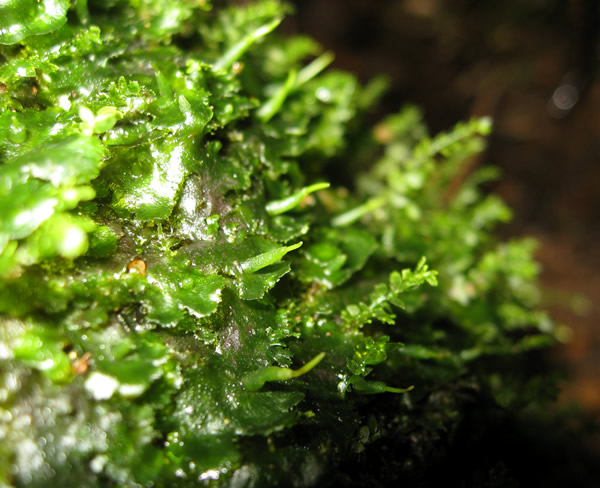
Hornworts are small, short, nonflowering, nonvascular plants which live both on land and in water. They represent an early land plant group and belong to three hundred species in the order Bryophyta. Related to mosses and liverworts, hornworts are sometimes called horned liverworts.

Evolutionary biologists have found a few fossils that could be the first known hornwort specimens. Fossilized spores dating from the late Cretaceous period, about 100 million years ago, are considered to be from hornworts.

Other fossils dated earlier in that period resemble hornworts but might actually have been liverworts. Spores from the Miocene epoch, approximately twenty-six million years ago, are the most common hornwort fossils.

Hydroponics

Hydroponics
Hydroponics

Literally “water culture,” hydroponics originally referred to the growth of plants in a liquid medium. It now applies to all systems used to grow plants in nutrient solutions with or without the addition of synthetic soil for mechanical support.

Hydroponics has become an important method of crop production with the increase in the number of commercial greenhouse operations. Greenhouses are utilized in the production of a wide array of bedding plants, flowers, trees, and shrubs for commercial as well as home and garden use.

Cash receipts from greenhouse and nursery crops total more than $4 billion annually. In some arid regions, the majority of vegetable crops are produced in greenhouses.