Showing posts with label paleobotany. Show all posts

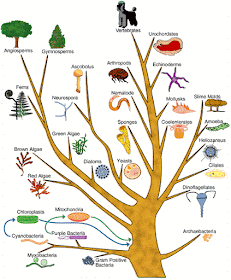
Archaea

Archaea
Archaea

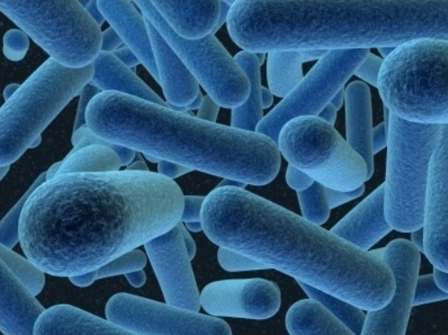
The domain Archaea represents a diverse group of prokaryotes originally found in environments once considered to be hostile to life, now known to be widely distributed in nature.

The cycling of plant nutrients, such as carbon, nitrogen, and sulfur, requires the activity of microorganisms that convert these elements to forms readily available to plants. These microorganisms, which are generally found in both soil and water, include both prokaryotic organisms of the domain Bacteria and the domain of prokaryotes called Archaea, which play significant roles in nutrient cycling.

Along with Eukarya, to which protists, fungi, plants, and animals belong, the Archaea formone of the three domains of life. The Archaea are related to both Bacteria and Eukarya and, in some respects, appear to bemore closely related to Eukarya.
Bryophytes

Bryophytes
Bryophytes

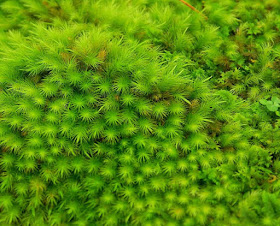
Bryophytes comprise three phyla of nonvascular plants, which generally lack the specialized conductive tissues (xylem and phloem) that are found in the vascular plants, are small in size, and are distributed worldwide in moist, shady habitats.

Bryophytes (from the Greek word bryon, meaning “moss”) were once grouped together into one large phylum. Many botanists today recognize that these organisms belong to at least three distinct phyla: phylum Hepatophyta (the liverworts), phylum Anthocerophyta (the hornworts), and phylum Bryophyta (the mosses).

Origin and Relationships

Bryophytes are thought to have originated more than 430 million years ago, during the Silurian period. Many botanists speculate that bryophytes arose from an ancestor in the green algal order Charales or Coleochaetales based on biochemical, morphological, and life history comparisons.

Cycads and Palms

Cycads and Palms
Cycads and Palms

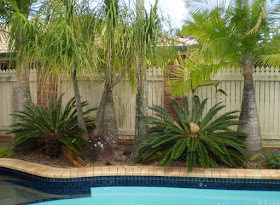
Members of the phylum Cycadophyta, cycads are descendants of giant, prehistoric seed-bearing, nonflowering plants that thrived when dinosaurs lived. Palms are flowering plants with primitive origins that share characteristics with cycads but are not related to them.

Cycadophyta is one of the four phyla of gymnosperms in the kingdom Plantae. At one time, cycads grew on every continent. Fossil cycads have been located in areas where no modern cycads grow, such as Antarctica and Europe, suggesting that those places once had milder temperatures.

Origins and Habitat

The oldest cycad fossils are 245 to 208 million years old, from the Triassic period. The first cycads are believed to have appeared in the Permian period 270 million years ago. Some botanists hypothesize that cycads originated as progymnosperms in the Devonian period about 408 million to 360 million years ago.

Dendrochronology

Dendrochronology
Dendrochronology

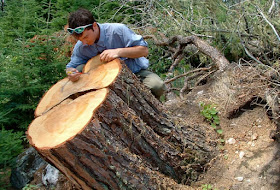
Dendrochronology is the science of examining and comparing growth rings in both living and aged woods to draw inferences about past events and environmental conditions.

In forested regions with seasonal climates, trees produce a growth ring to correspond with each growing season. At the beginning of the growing season, when conditions are optimum, the vascular cambium produces many files of large xylem cells that form wood.

As the conditions become less optimal, the size and number of cells produced decreases until growth stops at the end of the growing season. These seasonal differences in size and number of cells produced are usually visible to the unaided eye.

Evolution: Convergent and Divergent

Evolution: Convergent and Divergent

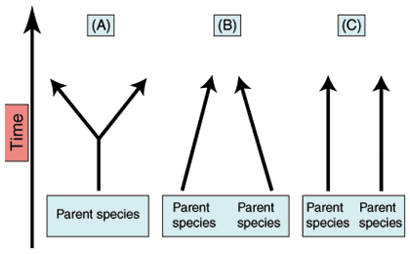
Some of the most dramatic examples of natural selection are the result of adaptation in response to stressful climatic conditions. Such selection may cause unrelated species to resemble one another in appearance and function, a phenomenon known as convergence.

In other situations, subpopulations of a single species may split into separate species as the result of natural selection. Such divergence is best seen on isolated islands.

Convergent Evolution

Convergent evolution occurs when organisms from different evolutionary lineages evolve similar adaptations to similar environmental conditions. This can happen even when the organisms are widely separated geographically.

Evolution: Gradualism vs. Punctuated Equilibrium

Evolution: Gradualism vs. Punctuated Equilibrium

The gradualism model of evolution proposes that a progenitor species gradually gave rise to many new species, with no special mechanisms accounting for the origins of new genera or groups of higher classifications—only the accumulation of many small changes in the frequencies of alleles in gene pools. The punctuated equilibrium model of evolutionary change supposes long periods of little or no change interspersed with short intervals of rapid change.

Charles Darwin, author of On the Origin of Species by Means of Natural Selection (1859), believed that morphological change was inevitable and proceeded slowly, encompassing slight, successive, and gradual changes within lineages.

Speciation, therefore, was the result of the gradual accumulation of changes within ancestral populations over time, ultimately leading to the formation of recognizably new and different species.

Evolution of Cells

miller's spark discharge experiment
Miller's spark discharge experiment

The earliest cells evolved sometime early in the Precambrian era,which includes the first four billion years of Earth’s history. Attempts to understand life’s origins are difficult, as there are very few clues left in the fossil record from those early times.

The hypotheses and models of the origin of life that have been developed are based on contemporary understanding of how life works at the molecular and cellular levels and on assumptions about the conditions on Earth three billion to four billion years ago.

One assumption made about the origins of life involves the composition of the atmosphere shortly after the earth was formed. According to this assumption, the earth’s atmosphere at this time contained very little free oxygen. It was an atmosphere perhaps made primarily of methane, ammonia, carbon dioxide, nitrogen, carbon monoxide, and water vapor.

Evolution of Plants

ferns (Pterophyta)
Ferns (Pterophyta)

As a result of prehistoric events such as the Permian-Triassic extinction event and the Cretaceous-Tertiary mass extinction event,many plant families and some ancestors of extant plant were extinct before the beginning of recorded history.

The general trend of earth’s plant diversification involves four major plant groups that rose to dominance from about the Middle Silurian period to present time. The first major group providing land vegetation comprised the seedless vascular plants, represented by the phyla Rhyniophyta, Zosterophyllophyta, and Trimerophytophyta. The second major group appearing in the late Devonian period was made up of the ferns (Pterophyta).

The third group, the seed plants (sometimes called the Coal Age plants), appeared at least 380 million years ago (mya). This third group includes the gymnosperms (Gymnospermophyta), which dominated land flora for most of the Mesozoic era until 100 mya.

Ferns

Ferns
Ferns

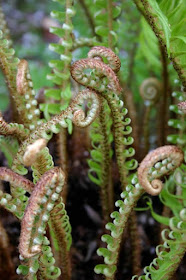
Ferns are among the most recognizable members of the phylum Pterophyta, which are primitive, nonflowering, vascular plants that primarily reproduce by spores and occur in many variations, complicating classification.

Approximately twelve thousand extant species of fern are classified in the phylum Pterophyta. These seedless plants display a diversity of physical and reproductive characteristics that separate them taxonomically. They have leaves containing branching veins known as megaphylls. Fossils from the Devonian period, about 395 million years ago, include some structures resembling Pterophyta.

These plants are believed to have been the source for gymnosperms. Most early fernlike plants that evolved in a variety of forms during the next period, the Carboniferous (approximately 345 million to 280million years ago), which is often referred to as the age of the ferns, became extinct afterward.

Fossil Plants

Fossil Plant
Fossil Plant

Fossil plants are remnants, impressions, or traces of plants from past geologic ages preserved in the earth’s crust.

The rise of land-dwelling animals paralleled the rise of plants, which have always been the basis for animal life. Fossil plants are a valuable source of information regarding such phenomena as changes in climate, ancient geography, and the evolution of life itself.

Thallophytes

The earliest fossil plants are represented by a phylum called the thallophytes. The geological record of the thallophytes is incomplete. Of seven large groups, only a few are represented by fossils.

Ginkgos

Ginkgo
Ginkgo

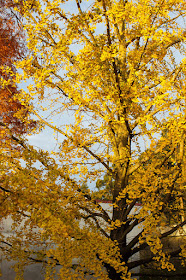
The ginkgos, phylum Ginkgophyta, constitute one of four phyla of the gymnosperms in the kingdom Plantae. Ginkgo biloba, the maiden hair tree, is the only living representative of the ginkgo family, Ginkgoaceae, a group of plants that have lived for millions of years and are identified by an abundant fossil record.

The ginkgo is a hairless, deciduous tree with a straight trunk and pyramid-shaped foliage usually sparsely branched when young, becoming denser with age. Leaves are fan-shaped, 2 to 3 inches (5 to 7.5 centimeters) across, sometimes divided into two lobes.

The ginkgo normally reaches heights of 80 to 100 feet (24 to 30meters) and under favorable conditions grows to 125 feet (38 meters) or more. The bark is reddish-gray and corky, with irregular, wide fissures dividing rough plates. On old trees, the bark becomes gray, rough, and deeply furrowed.

Hornworts

Hornworts
Hornworts

Hornworts are small, short, nonflowering, nonvascular plants which live both on land and in water. They represent an early land plant group and belong to three hundred species in the order Bryophyta. Related to mosses and liverworts, hornworts are sometimes called horned liverworts.

Evolutionary biologists have found a few fossils that could be the first known hornwort specimens. Fossilized spores dating from the late Cretaceous period, about 100 million years ago, are considered to be from hornworts.

Other fossils dated earlier in that period resemble hornworts but might actually have been liverworts. Spores from the Miocene epoch, approximately twenty-six million years ago, are the most common hornwort fossils.

Liverworts

Liverworts
Liverworts

Liverworts (phylum Hepatophyta) are one of three ancient lines of bryophytes (liverworts, hornworts, and mosses): low-growing land plants that depend on free water (rain) for fertilization.

Liverworts, with about six thousand species, generally prefer somewhat cooler, moister, shadier, and more acidic habitats than mosses. Like any bryophyte, a liverwort has a dominant (conspicuous) green gametophyte and a small, attached sporophyte, which is a single-stalked sporangium that developed from a fertilized egg.

As in hornworts, liverwort gametophytes are typically dorsiventrally symmetrical (flattened). A unique feature of liverworts is the presence, in the gametophyte, of oil bodies, cellular organelles that produce aromatic terpenoids.

Mosses

Mosses
Mosses

Members of the ten thousand species of the class Bryopsida or Musci in the order Bryophyta, mosses are usually tiny, fragile, nonflowering, spore-bearing plants. They are related to hornworts and liverworts.

Mosses evolved from green algae before the existence of reptiles and flying insects. Fossils from the Devonian period, about 410million to 353 million years ago, contain mosses. The first known mosses lived 286 million to 245 million years ago, during the Permian period.

By the Tertiary period, approximately 66.4 million to 1.6 million years ago, at least one hundred moss species existed. Fossilized mosses, including Muscites, Palaeohypnum, and Protosphagnum, resemble modern moss species structurally, indicating that mosses have not evolved quickly.

Paleobotany

Paleobotany
Paleobotany

The study of plants in the fossil record, in order to understand both the evolution of plant life and the ecology of ancient eras, is known as paleobotany.

Only a small percentage of the plants that ever lived left a record of their existence, surviving as fossils: mineralized wood, flowers in amber, leaf imprints in coal, or other indicators of life in an earlier era. Paleobotanists document this fossil record and use it to interpret the past evolution of plants.

Importance of Plant Fossils

Paleontology (or paleobiology) is the science concerned with fossils, the physical evidence of prehistoric life—including plants, animals, and microorganisms—on the earth. Paleobotany focuses on plant fossils, including algae, fungi, and related organisms, as well as mosses, ferns, and seed plants.

As most organisms decompose rapidly after death, their preservation in nature is a rare event. Most individuals are not represented in the fossil record, and even many species that must have existed have vanished without a trace.

Paleoecology

Paleoecology
Paleoecology

Paleoecology is the study of ancient environments. As a field of science, paleoecology ismost closely related to paleontology, the study of fossils. It is also related to paleobotany and a number of other areas of study dealing with the distant past.

Because paleoecology and its related disciplines (paleontology, paleobotany, paleoclimatology, paleogeography, and others) deal with the past, scientists are unable to apply the usual scientific criteria of direct observation and measurement of phenomena.

In order to make any conclusions about the past, scientists must assume at least one statement to be true without direct observation: The processes that exist in the modern universe and on the modern earth existed in the past.

Petrified Wood

Petrified wood
Petrified wood

Petrified wood is formed by the fossilized remains of ancient trees that were saturated with mineral-filled water which, over time, converted the woody tissues into stone.

Petrified wood is studied by scientists interested in prehistoric plants and their environments. The Latin word petros, meaning rock, is the source for the scientific term petrification. Petrified wood is actually the stone remnant of a prehistoric tree.

Formation

During the Triassic period, gymnosperms—seed-producing trees without flowers, such as gingkos and conifers—grew over much of the earth’s landmass. Volcanic eruptions triggered tremors, lightning, and heavy rains, which washed trees from higher elevations down to swampy valleys.

Psilotophytes

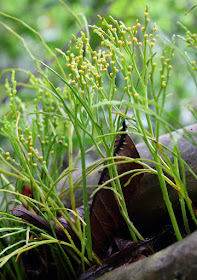
Psilotophytes - Psilotum nudum (Moa)

Psilotophyte is the common name for members of the phylum Psilotophyta (from the Greek word psilos, meaning “bare”). Molecular evidence points to the likelihood of psilotophytes as being highly reduced (and therefore derived) ferns.

If psilotophytes are indeed reduced ferns, they probably diverged from the fern lineage early, after ferns arose some 400 million years ago during the Devonian period.

The family Psilotaceae is the only family of psilotophytes. There are two living genera: Psilotum and Tmesipteris. Psilotum, the whisk fern, is widespread throughout tropical and subtropical regions. Lacking leaves and roots, Psilotum species grow in a variety of soil conditions, including very warm soils near active volcanoes, or they may be epiphytic, growing on the trunks of host trees.

Rhyniophyta

Rhyniophyta
Rhyniophyta

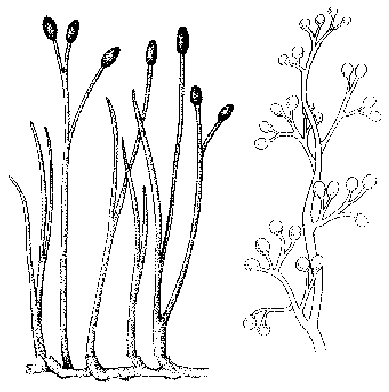
When first proposed by Harlan Banks in 1968, the Rhyniophyta were the first and oldest vascular land plants. The trimerophytes subsequently evolved from them.

In 1908, Octave Lignier developed a model of what the sporophyte of the earliest vascular land plants might look like. The sporophyte is a diploid (2n) plant that produces spores in a sporangium, while its counterpart, the gametophyte, is a haploid (n) plant that bears the male (antheridia) and female (archegonia) sex organs.

Lignier proposed that the first vascular land plants would consist of a forked, photosynthetic stem lacking both roots and leaves.

Seedless Vascular Plants

Seedless Vascular Plants

Seedless vascular plants possess vascular tissues (xylem and phloem) for transport of materials through the body but do not produce seeds bearing dormant embryos as part of the reproductive process. They are among the oldest of land plants.

Modern seedless vascular plants include species from several different phyla, including the club mosses, spike mosses, and quill worts of the phylum Lycophyta, the horsetails of the phylum Sphenophyta, the whisk ferns of the phylum Psilotophyta, and the great diversity of ferns in the phylum Pterophyta. Lycophytes, sphenophytes, and psilotophytes are generally referred to as fern allies.

Carolus Linnaeus used theword Cryptogamia (from the Greek kryptos, meaning “hidden,” and gamos, meaning “marriage,” or reproduction) as an inclusive taxonomic category for a wide range of organisms such as bryophytes, ferns, fern allies, algae, and fungi whose sexual reproductive parts were concealed from observation. The term cryptogam in modern usage refers to plants that do not produce seeds.