Showing posts with label seedless vascular plants. Show all posts

Ferns

Ferns
Ferns

Ferns are among the most recognizable members of the phylum Pterophyta, which are primitive, nonflowering, vascular plants that primarily reproduce by spores and occur in many variations, complicating classification.

Approximately twelve thousand extant species of fern are classified in the phylum Pterophyta. These seedless plants display a diversity of physical and reproductive characteristics that separate them taxonomically. They have leaves containing branching veins known as megaphylls. Fossils from the Devonian period, about 395 million years ago, include some structures resembling Pterophyta.

These plants are believed to have been the source for gymnosperms. Most early fernlike plants that evolved in a variety of forms during the next period, the Carboniferous (approximately 345 million to 280million years ago), which is often referred to as the age of the ferns, became extinct afterward.
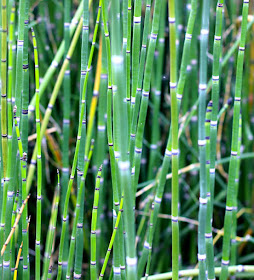
Horsetails

Horsetails
Horsetails

The plants known as horsetails or scouring rushes belong to the genus Equisetum, the only remaining genus in the phylum Sphenophyta, a group of seedless vascular plants.

Members of the phylum Sphenophyta, the horsetails, reached their maximum diversity during the Late Devonian and Carboniferous periods. One fossil group of the Sphenophyta, the calamites, grew from 12 to 18 meters (24 to 60 feet) in height, with trunks as much as 45 centimeters (more than 3 feet) in diameter.

Today these ancient plants survive in the single genus Equisetum. Equisetumis found throughout the world and, depending on the classification scheme, comprises between fifteen and twenty-five species.

Lycophytes

Lycophytes
Lycophytes

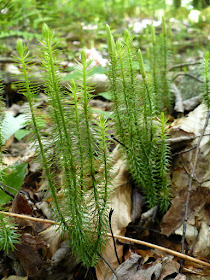
The lycophytes, which compose the phylum Lycophyta, are one of four phyla of seedless plants having vascular, or conducting, tissue. The living lycophytes are all small and herbaceous, whereas the extinct lycophytes included large trees, which were important in the formation of coal.

There are at least twelve genera and twelve hundred species of living lycophytes. These include plants known as club mosses and spike mosses (though none are true mosses) and quillworts. The lycophytes consist of three families, each belonging to a separate order. The family Selaginellaceae has a single genus, Selaginella.

Similarly, the family Isoetaceae has a single genus, Isoetes. The remaining genera belong to the family Lycopodiaceae. The living lycophytes are widely distributed but reach their greatest species diversity in the tropics. The lycophytes are similar to the higher vascular plants—the gymnosperms and angiosperms—in having vascular tissue and true leaves, stems, and roots.

Psilotophytes

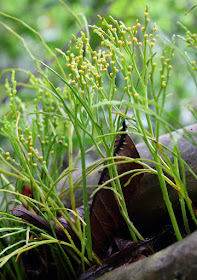
Psilotophytes - Psilotum nudum (Moa)

Psilotophyte is the common name for members of the phylum Psilotophyta (from the Greek word psilos, meaning “bare”). Molecular evidence points to the likelihood of psilotophytes as being highly reduced (and therefore derived) ferns.

If psilotophytes are indeed reduced ferns, they probably diverged from the fern lineage early, after ferns arose some 400 million years ago during the Devonian period.

The family Psilotaceae is the only family of psilotophytes. There are two living genera: Psilotum and Tmesipteris. Psilotum, the whisk fern, is widespread throughout tropical and subtropical regions. Lacking leaves and roots, Psilotum species grow in a variety of soil conditions, including very warm soils near active volcanoes, or they may be epiphytic, growing on the trunks of host trees.

Rhyniophyta

Rhyniophyta
Rhyniophyta

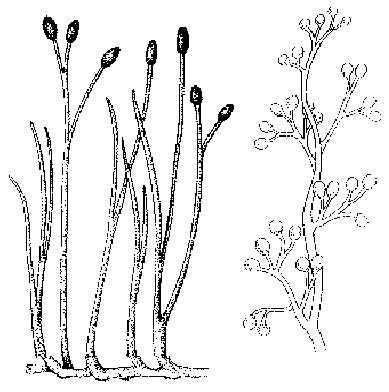
When first proposed by Harlan Banks in 1968, the Rhyniophyta were the first and oldest vascular land plants. The trimerophytes subsequently evolved from them.

In 1908, Octave Lignier developed a model of what the sporophyte of the earliest vascular land plants might look like. The sporophyte is a diploid (2n) plant that produces spores in a sporangium, while its counterpart, the gametophyte, is a haploid (n) plant that bears the male (antheridia) and female (archegonia) sex organs.

Lignier proposed that the first vascular land plants would consist of a forked, photosynthetic stem lacking both roots and leaves.

Seedless Vascular Plants

Seedless Vascular Plants

Seedless vascular plants possess vascular tissues (xylem and phloem) for transport of materials through the body but do not produce seeds bearing dormant embryos as part of the reproductive process. They are among the oldest of land plants.

Modern seedless vascular plants include species from several different phyla, including the club mosses, spike mosses, and quill worts of the phylum Lycophyta, the horsetails of the phylum Sphenophyta, the whisk ferns of the phylum Psilotophyta, and the great diversity of ferns in the phylum Pterophyta. Lycophytes, sphenophytes, and psilotophytes are generally referred to as fern allies.

Carolus Linnaeus used theword Cryptogamia (from the Greek kryptos, meaning “hidden,” and gamos, meaning “marriage,” or reproduction) as an inclusive taxonomic category for a wide range of organisms such as bryophytes, ferns, fern allies, algae, and fungi whose sexual reproductive parts were concealed from observation. The term cryptogam in modern usage refers to plants that do not produce seeds.

Tracheobionta

Hollow cylinder surrounding the pith
Tracheobionta is the subkingdom of plants that contain vascular tissues, xylem and phloem. They are commonly known as the vascular plants.

Vascular plants are plants that have tissues called xylem and phloem as conducting tissues. Xylem is tissue composed of vessels, fibers, and tracheids responsible for upward conduction of water and dissolved minerals; it also functions as the supporting tissue of stems.

Phloem is conducting tissue that is responsible for moving food manufactured in the leaves to other parts of the plant, including the roots. The botanical name for the vascular plants is Tracheobionta. This group of plants includes both seedless and seed plants, including the flowering plants (angiosperms).

Trimerophytophyta

Trimerophytophyta
Trimerophytophyta

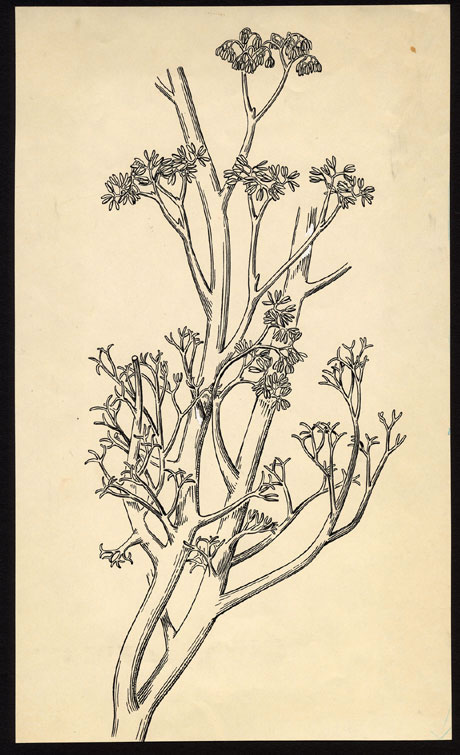
As first proposed by Harlan Banks in 1968, the trimerophytes evolved from the rhyniophytes and then gave rise, either directly or indirectly, to all other groups of vascular land plants except the zosterophyllophytes and lycopods.

The trimerophytes appeared and diversified between 406 million and 401 million years ago, during the Devonian period. They evolved from the rhyniophytes (Rhyniophyta), and they share a number of characteristics with that group.

Both groups branched by having an axis fork into two branches of equal size. Viewed from the side, the point of branching would appear like a capital Y. Both groups also bore elongate sporangia at the ends of some of these branches.

The chief feature that distinguished the two groups was size. The rhyniophytes were small plants, approximately 25 centimeters (10 inches) or less in height.

Zosterophyllophyta

Zosterophyllophyta
Zosterophyllophyta

The Zosterophyllophyta are a phylum of extinct seedless vascular plants that have been recovered from fossils in the stratum ranging from the Early to the Late Devonian, approximately 408 million to 370 million years ago.

Today, scientists believe that zosterophyllophytes and lycopods arose at about the same time from a common but unknown ancestor. The zosterophyllophytes went extinct, but the lycopods have survived until today.

Characteristics

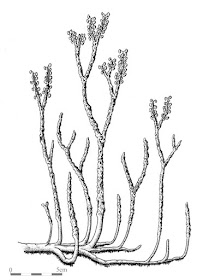
The Zosterophyllophyta evolved independently from the Rhyniophyta, but both groups shared a number of characteristics. Their aerial stems arose from a horizontal axis, the rhizome, when one of two branches formed by the forking rhizome turned and grew upward. Some of the zosterophyllophytes had no leaves, the common condition in the rhyniophytes.