Showing posts with label classification and systematics. Show all posts

Cladistics

Cladistics
Cladistics
Cladistics is a quantitative method of classification of plants that attempts to recover evolutionary relationships, based on observable characters.

Since the dawn of history, humans have classified plants. In primitive cultures classifications were by economic use, such as food, clothing, medicine, and shelter. Later the form (morphology) of a plant became important, for example, trees, shrubs, or herbs.

Carolus Linneaus considered the similarity of floral parts to be critical, and this formed the basis of his classification system. Each of these systems is said to be “artificial.” That is, the classification was solely for a human purpose and did not attempt to indicate genetic relationships between plants.

Molecular Systematics

Molecular Systematics

Molecular systematics is the discipline of classifying organisms based on variations in protein and DNA in order to make fine taxonomic categorizations not solely dependent on morphology.

Taxonomy, sometimes called systematics, is the study of categorizing organisms into logically related groupings. Historically, the way to perform taxonomy was to examine physical characteristics of organisms and classify species according to the most commonly held traits. Unfortunately, this method of systematizing plants and animals assumed that because they have common physical traits, they have common ancestry.

A gross form of this miscategorization might take place, for example, if one suggested that since both mushrooms and ivy can grow on the sides of trees, they are closely related. The two species certainly have common physical traits but only vaguely resemble each other.

Paleobotany

Paleobotany
Paleobotany

The study of plants in the fossil record, in order to understand both the evolution of plant life and the ecology of ancient eras, is known as paleobotany.

Only a small percentage of the plants that ever lived left a record of their existence, surviving as fossils: mineralized wood, flowers in amber, leaf imprints in coal, or other indicators of life in an earlier era. Paleobotanists document this fossil record and use it to interpret the past evolution of plants.

Importance of Plant Fossils

Paleontology (or paleobiology) is the science concerned with fossils, the physical evidence of prehistoric life—including plants, animals, and microorganisms—on the earth. Paleobotany focuses on plant fossils, including algae, fungi, and related organisms, as well as mosses, ferns, and seed plants.

As most organisms decompose rapidly after death, their preservation in nature is a rare event. Most individuals are not represented in the fossil record, and even many species that must have existed have vanished without a trace.

Species and Speciation

Species and Speciation

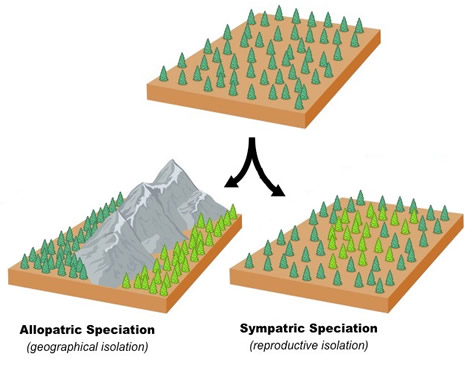
A species is any group of organisms recognized as distinct, with members able to interbreed with one another and produce fertile offspring. Speciation is the evolutionary process whereby a species comes into existence.

Species are distinct kinds of organisms, in that the organism can be recognized as different from other kinds of similar organisms by a combination of characteristic shapes, sizes, behaviors, physiology, or other attributes.

For instance, white oaks can be recognized as different from other oak species by growth form and habitat, along with a combination of leaf, fruit, and bark characteristics.

Systematics and Taxonomy

Systematics and Taxonomy

Systematics deals with evolutionary, or phylogenetic, relationships among organisms, whereas taxonomy is more involved with the classification, naming, and description of organisms.

In practice, the two terms are often used interchangeably to refer to the study of relationships among organisms,which in turn often derives from their description and drives their naming.

The history of the disciplines of systematics and taxonomy has shifted with the evolution over the years of the state of knowledge about living organisms, their origins, and their relationships. There has been a historical shift from an emphasis on classification (simply naming and identifying organisms) to the study of phylogenetic (evolutionary) relationships.

Trophic Levels and Ecological Niches

Trophic Levels and Ecological Niches

To be meaningful, classification of organisms based on divisions within the food pyramid, called trophic levels, often must be considered alongside the particular space, or place niche, occupied by an organism and its functional role in the community, the totality of the organism’s interactions and relationships with other organisms and the environment, or ecological niche.

For many years, ecologists referred to niche in terms of an organism’s place in the food pyramid. The food pyramid is a simplified scheme showing organisms’ interactions with one another while obtaining nourishment.

The food pyramid is represented visually as a triangle, often with four horizontal divisions, each division being a different trophic level.