Showing posts with label forests and forestry. Show all posts

Conifers

Forest trees
Conifers

The conifers, which are woody plants consisting mostly of evergreen trees, make up the phylum Coniferophyta, one of four phyla of gymnosperms that have living representatives. The word “conifer”means cone-bearing. Most conifers bear their reproductive structures in cones.

With 50 genera and 550 of the 700 known gymnosperm species, the phylum Coniferophyta includes the bulk of the gymnosperms. Coniferophyta is also the most widespread and, in terms of numbers of individual trees, the most abundant of the gymnospermphyla.

The abundance and economic and ecological importance of the Coniferophyta are out of all proportion to the number of species, which does not begin to compare to the 235,000 species of angiosperms (phylum Anthophyta).
Deforestation

Deforestation
Deforestation

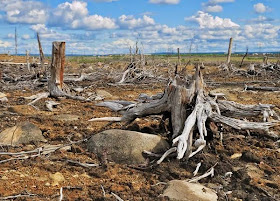
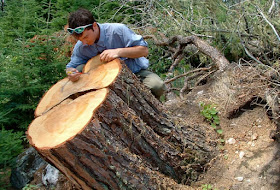
Deforestation is the loss of forestlands through encroachment by agriculture, industrial development, nonsustainable commercial forestry, or other human as well as natural activity.

Concerns about deforestation, particularly in tropical regions, have risen as the role that tropical forests play in moderating global climate has become better understood.

Environmental activists decried the apparent accelerating pace of deforestation in the twentieth century because of the potential loss of wildlife and plant habitat and the negative effects on biodiversity.

Dendrochronology

Dendrochronology
Dendrochronology

Dendrochronology is the science of examining and comparing growth rings in both living and aged woods to draw inferences about past events and environmental conditions.

In forested regions with seasonal climates, trees produce a growth ring to correspond with each growing season. At the beginning of the growing season, when conditions are optimum, the vascular cambium produces many files of large xylem cells that form wood.

As the conditions become less optimal, the size and number of cells produced decreases until growth stops at the end of the growing season. These seasonal differences in size and number of cells produced are usually visible to the unaided eye.

Ecology: Concept

Ecology: Concept
Ecology: Concept

Ecology is the scientific study of ecosystems, which are generally defined as local units of nature, consisting of the aggregate of plants, animals, the physical environment, and their interactions.

Ecosystems consist of both biotic (living) and abiotic (nonliving) components. Biotic components include plants, animals, and microorganisms. The abiotic components are the physical factors of the ecosystem. The roots of ecology can be traced to the writings of early Greek philosophers such as Aristotle and Theophrastus, who were keen observers of plants and animals in their natural habitats.

During the nineteenth century, German biogeographer Alexander von Humboldt and English naturalist Charles Darwin wrote detailed descriptions of their travels. They recognized that the distribution of living things is determined by such factors as rainfall, temperature, and soil.

Forest and Range Policy

Forest and rangeland

Forest and range policies are laws protecting forests and rangelands. Such policies usually seek to sustain and protect biodiversity while setting guidelines for the sustainable use of natural resources.

Many national governments have established forest and range policies. Rangeland, land that supplies forage for grazing and browsing animals, covers almost one-half of the ice-free land on earth. More than three billion cattle, sheep, goats, camels, buffalo, and other domestic animals graze on rangelands.

These animals are important in converting forages into milk and meat, which provide nourishment for people around the world. Forests cover almost 30 percent of the earth and provide humans with lumber, fuel woods, food products, latex rubber, and valuable chemicals that constitute prescription and nonprescription drugs.

Forest Management

Forest management
Forest management

Forest management includes reforestation programs as well as techniques to manage logging practices, provide grazing lands, support mining operations, maintain infrastructure networks, or slow the destruction of rain forests.

Forests provide lumber for buildings, wood fuel for cooking and heating, and raw materials for making paper, latex rubber, resin, dyes, and essential oils. Forests are also home to millions of plants and animal species and are vital in regulating climate, purifying the air, and controlling water run-off.

A 1993 global assessment by the United Nations Food and Agriculture Organization (FAO) found that three-fourths of the forests in the world still have some tree cover, but less than one-half of these have intact forest ecosystems. Deforestation is occurring at an alarming rate, and management practices are being sought to try to halt this destruction.

Forests

Forests
Forests

Forests are complex ecosystems in which trees are the dominant type of plant. There are three main forest biomes: tropical, temperate, and boreal.

Both humans and animals depend on forests for food, shelter, and other resources. Forests once covered much of the world and are still found from the equator to the Arctic regions.

A forest may vary in size from only a few acres to thousands of square miles, but generally any natural area in which trees are the dominant type of plant can be considered a forest.

Old Growth Forest

Old growth forest
Old growth forest

Ancient ecosystems, old-growth forests consist of trees that have never been harvested. These forests are, in some cases, the only habitat for a number of plant and animal species.

The timber industry views the large, old trees as a renewable source of fine lumber, but environmentalists see them as part of an ancient and unique ecosystem that can never be replaced. In the 1970’s scientists began studying the uncut forests of the Pacific Northwest and the plants and animals that inhabited them.

In a U.S. Forest Service publication, Ecological Characteristics of Old-Growth Douglas-Fir Forests (1981), Forest Service biologist Jerry Franklin and his colleagues showed that these forests were not just tangles of dead and dying trees but rather a unique, thriving ecosystem made up of living and dead trees, mammals, insects, and even fungi.

Rain Forest Biomes

Rain Forest Biomes
Rain Forest Biomes

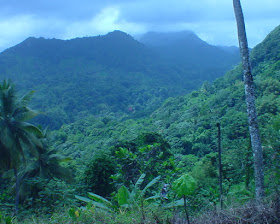
Tropical forests exist in frost-free areas between the Tropic of Cancer and the Tropic of Capricorn. Temperatures range from warm to hot year-round. These forests are found in northern Australia, the East Indies, Southeast Asia, equatorial Africa, and parts of Central America and northern South America.

Rain forests are complicated tropical ecosystems with extremely high levels of biodiversity. Occupying only 6 percent of the earth’s surface, they contain at least 50 percent of the world’s known plant and animal species.

The rain forests are being destroyed at such an unprecedented rate, however, that if the trend continues, no sustainable tropical rain forests will remain by the middle of the twenty-first century.

Savannas and Deciduous Tropical Forests

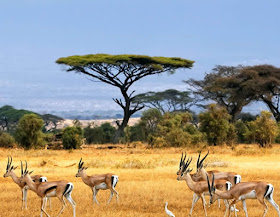
Savanna grassland
Savanna grassland

Savannas are areas of continuous grass or sedge cover beneath trees that range from scattered, twisted, and gnarled individuals to open wood lands. Deciduous tropical forests have continuous to open forest cover and undergo a leafless period during a seasonally lengthy dry season.

Where the annual rainfall in tropical regions is less than 2,000 millimeters and three to six months out of the year are dry, savannas and deciduous forests are common. Both savannas and deciduous tropic forests often occur where the annual rainfall is less than that of savannas. Together, the two biomes are referred to here as the dry tropical biome.

A pronounced pattern of seasonally wet and dry periods is the most important factor affecting the distribution of these types of plant cover. Higher soil fertility favors forest over grasses and savanna such as in the cerrado of Brazil, which occurs only on certain geological formations and low-nutrient soils.

Taiga

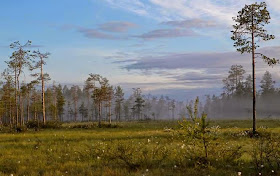
Taiga in Findland
Taiga in Findland

“Taiga” derives from a Russian word for the forests of cone-bearing, needle-leaved, generally evergreen trees of northern Eurasia and North America. “Coniferous forest” and “boreal forest” are other names given to this biome.

Some botanists include the temperate rain forests along the Pacific Coast of North America and the coniferous forests in the western mountains in the taiga.

While the term “coniferous forest” can be applied to temperate rain forest and coniferous forest biomes in the western mountains, the terms “taiga” and “boreal forest” should be restricted to the northern forests. “Taiga” is also sometimes used in a more restricted way, to mean a subdivision of the boreal forest.

Timber Industry

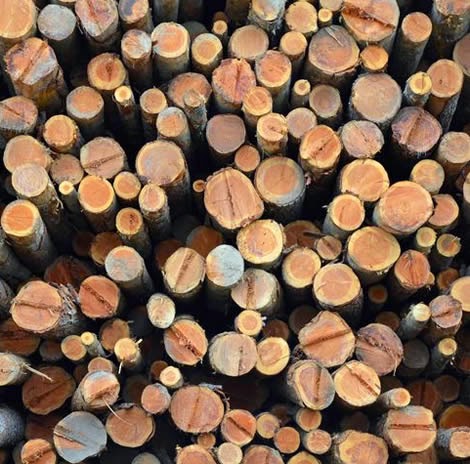
Timber Industry - Pile of freshly cut logs

The timber industry comprises a diverse group of companies and organizations using wood and fiber harvested from forests in the production of solid wood products (such as furniture and lumber), reconstituted wood products (such as particle board), pulp and paper, and chemicals.

Globally, about 3.8 billion cubic meters of wood were used for human consumption in 1995. The rate was increasing by 2.3 percent per year, faster than the rate of population growth.

More than fifty thousand establishments in the United States are involved in the manufacture of forest products, and this industry contributed approximately 8 percent of the United States’ gross national product in 1980. In addition, many other commercial products are derived from forest resources, including types of fuel, medicine, and food, and specialty items such as Christmas trees.

Wood

Wood
Wood

Wood is a fibrous plant tissue that functions in support and water conduction. It composes the bulk of stems and roots in the magnoliids and eudicots of the angiosperms (phylum Anthophyta), as well as in the conifers (phylum Coniferophyta).

It is formed by thickening growth,which persistently adds newlayers that accumulate as a cylinder of wood between the pith and the bark.

Secondary Xylem

Technically, wood is secondary xylem. The growth in girth that produces it is called secondary growth. This growth occurs after the stem or root segment has completed its increase in length, or primary growth. Secondary growth also yields, in much smaller amounts, secondary phloem, which becomes a part of the bark.

Wood and Charcoal as Fuel Resources

Wood and charcoal
Wood and charcoal

Globally, the amount of wood and charcoal used for fuel exceeds the combined amount of wood used for all other purposes. Between 60 percent and 95 percent of the total energy needs of some developing countries are met by wood.

Wood is one of the oldest energy sources. Rough wood and bark may be burned directly for fuel, or wood may be converted into charcoal by charring in a kiln from which air has been excluded.

According to the Food and Agriculture Organization of the United Nations, more than half of all the wood utilized in the world at the end of the twentieth century was used for energy production.

Wood and Timber

Wood and Timber
Wood and Timber

The use of products derived from woody plants, notably timber, takes advantages of wood’s insulating ability, strength, workability, and abundance as a construction and engineering material.

No other material has all the advantages of wood. One material may equal wood in insulating quality but lack its abundance and low cost. Another may rival it in strength but fail on the point of workability. A third may rank with it in work-ability but fail to measure in durability. If wood were a newly discovered material, its properties would startle the world.

Since the human race first started to build crude shelters at the dawn of civilization, wood has been available as a construction material. Wood has long been used in the construction of buildings, bridges, and boats.