Showing posts with label evolution. Show all posts

Adaptations

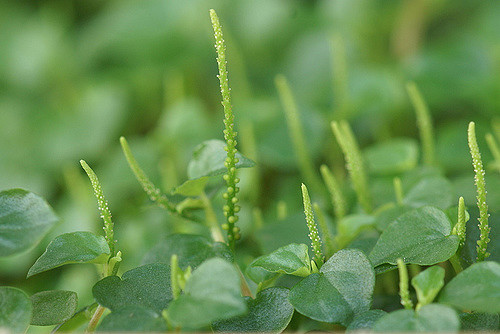
Water lilies, a kind of adaptations

The results of natural selection in which succeeding generations of organisms become better able to live in their environments are called adaptations. Many of the features that are most interesting and beautiful in biology are adaptations. Specialized structures, physiological processes, and behaviors are all adaptations when they allow organisms to cope successfully with the special features of their environments.

Adaptations ensure that individuals in populations will reproduce and leave well-adapted offspring, thus ensuring the survival of the species. Adaptations arise through mutations—inheritable changes in an organism’s genetic material.

These rare events are usually harmful, but occasionally they give specific survival advantages to the mutated organism and its offspring. When certain individuals in a population possess advantageous mutations, they are better able to cope with their specific environmental conditions and, as a result, will contribute more offspring to future generations than those individuals that lack the mutation.

Adaptive Radiation

Galapagos cacti
Galapagos cacti

In adaptive radiation, numerous species evolve from a common ancestor introduced into an environment with diverse ecological niches. The progeny evolve genetically into customized variations of themselves, each adapting to survive in a particular niche.

In 1898 Henry F. Osborn identified and developed the evolutionary phenomenon known as adaptive radiation, whereby different forms of a species evolve, quickly in evolutionary terms, from a common ancestor.

According to the principles of natural selection, organisms that are the best adapted (most fit) to compete will live to reproduce and pass their successful traits on to their offspring. The process of adaptive radiation illustrates one way in which natural selection can operate when members of one population of a species are cut off or migrate to a different environment that is isolated from the first.

Anaerobes and Heterotrophs

Anaerobes
Anaerobes

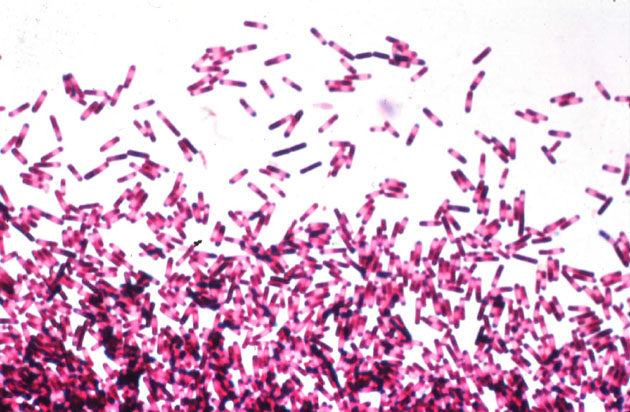
The first organisms to evolve on the earth are thought to have been heterotrophs and anerobes. Heterotrophs are organisms that cannot produce their own food but must fill their energy requirements by consuming organic molecules produced by other processes or organisms. Anaerobes are organisms that do not require free oxygen gas in order to survive; for some anaerobes, free oxygen may be poisonous.

Heterotrophs include many familiar organisms (such as animals) whose existence is tied to primary producers, those organisms that create energy-storing molecules, such as photosynthesizing plants. Anaerobes also are common, though less apparent. Typically, they are microscopic organisms restricted to living in a few surface environments where oxygen is absent.

It may seem strange, then, that these organisms were perhaps the first organisms to have evolved on the earth. Yet the combination of the heterotrophic lifestyle and the anaerobic life requirement is consistent with what is known about the conditions of the early earth’s surface environment.

Angiosperm evolution

Angiosperm
Angiosperm

Angiosperms (flowering plants) appeared about 130 million years ago and today dominate the plant world, with approximately 235,000 species.

In early Devonian-age rocks, approximately 363- 409 million years old, fossils of simple vascular and nonvascular plants can be seen. Ferns, lycopods, horsetails, and early gymnosperms became prominent during the Carboniferous period (approximately 290-363 million years ago).

The gymnosperms were the dominant flora during the Age of Dinosaurs, the Mesozoic era (65-245million years ago). More than 130 million years ago, from the Jurassic period to early in the Cretaceous period, the first flowering plants, or angiosperms (phylum Anthophyta), arose. Over the following 40 million years, angiosperms became the world’s dominant plants.

Animal-plant Interactions

Animal-plant Interactions

The ways in which certain animals and plants interact have evolved in some cases to make them interdependent for nutrition, respiration, reproduction, or other aspects of survival.

Ecology represents the organized body of knowledge that deals with the relationships between living organisms and their nonliving environments. Increasingly, the realm of ecology involves a systematic analysis of plant-animal interactions through the considerations of nutrient flow in food chains and food webs, exchange of such important gases as oxygen and carbon dioxide between plants and animals, and strategies of mutual survival between plant and animal species through the processes of pollination and seed dispersal.

A major example of animal-plant interactions involve the continual processes of photosynthesis and cellular respiration. Green plants are classified as ecological producers, having the unique ability, by photosynthesis, to take carbon dioxide and incorporate it into organic molecules.

Archaea

Archaea
Archaea

The domain Archaea represents a diverse group of prokaryotes originally found in environments once considered to be hostile to life, now known to be widely distributed in nature.

The cycling of plant nutrients, such as carbon, nitrogen, and sulfur, requires the activity of microorganisms that convert these elements to forms readily available to plants. These microorganisms, which are generally found in both soil and water, include both prokaryotic organisms of the domain Bacteria and the domain of prokaryotes called Archaea, which play significant roles in nutrient cycling.

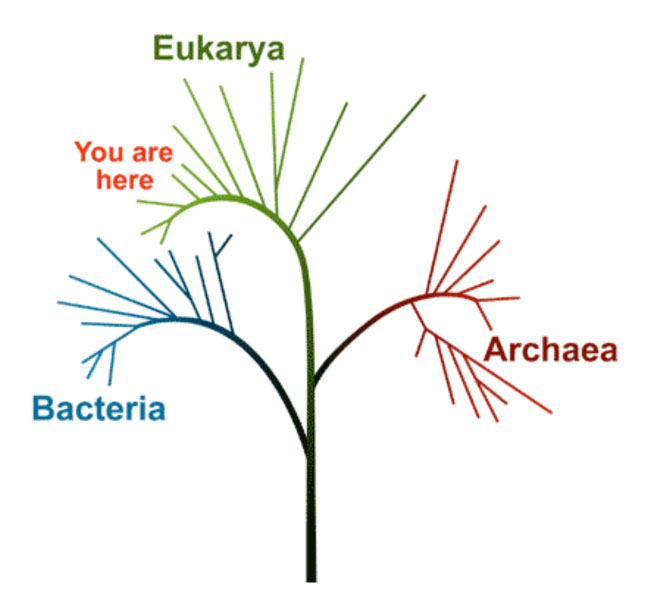
Along with Eukarya, to which protists, fungi, plants, and animals belong, the Archaea formone of the three domains of life. The Archaea are related to both Bacteria and Eukarya and, in some respects, appear to bemore closely related to Eukarya.

Biochemical Coevolution in Angiosperms

Biochemical Coevolution in Angiosperms

Flowering plants, or angiosperms, produce many compounds that are not directly related to growth and development. These secondary metabolites arise from primary metabolic pathways and act as antiherbivory mechanisms, allelochemicals, or attractants.

Secondary metabolites are biochemicals produced by plants in response to selection pressures. These pressures may be from herbivory, competition, or the need for pollination.

As plants produce compounds to enhance their survival, predators, competitors, and pollinators react and evolve means of adjusting to the plant’s efforts. Chemically simple secondary metabolites may be widespread throughout angiosperm (flowering plant) families, whereas more complex chemicals are often restricted to a single species.

Coevolution

Coevolution
Coevolution

Coevolution is the interactive evolution of two or more species that results in a mutualistic or antagonistic relationship.

When two or more different species evolve in a way that affects one another’s evolution, coevolution is taking place. This interactive type of evolution is characterized by the fact that the participant life-forms are acting as a strong selective pressure upon one another over a period of time.

The coevolution of plants and animals, whether animals are considered strictly in their plant-eating role or also as pollinators, is abundantly represented in every terrestrial ecosystem throughout the world where flora has established itself.

Competition

Plant competition
Plant competition

The struggle for food, space, and pollinators in order to survive can occur between individuals of different species (interspecific competition) or between individuals of the same species (intraspecific competition).

Competition is a major driving force in evolution, the process by which living organisms change over time, with better-adapted species surviving and less well-adapted species becoming extinct.

Evolution begins with mutation, changes in the nucleotide sequence of a gene or genes, resulting in the production of slightly altered genes which encode slightly different proteins.

Eukarya

Eukarya

The Eukarya form one of the domains of life in the three-domain classification system. Eukarya consists of the advanced, complex organisms, formed by eukaryotic cells (cells with nuclei), including fungi, algae, plants, and animals. The other two domains of life, Archaea and Bacteria, consist of simpler organisms formed by prokaryotic (nucleus-free) cells.

Two Types of Cell

The domain concept of biological organization is relatively new. As recently as the mid-twentieth century, two kingdoms—plant and animal—were widely accepted as describing the most significant split in the biological world. Every living thing was classified as either a plant or an animal. Subsequently, three additional kingdoms were recognized.

Only in the late twentieth century did it become clear, based on molecular and other evidence, that distinctions at the level of the kingdom did not acknowledge the most fundamental differences among organisms. A higher category, the domain, was therefore posited.

Evolution: Convergent and Divergent

Evolution: Convergent and Divergent

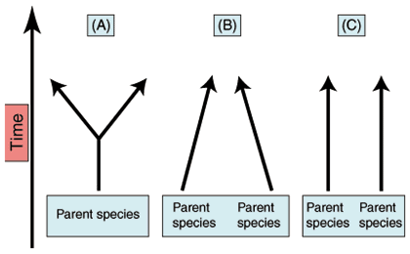
Some of the most dramatic examples of natural selection are the result of adaptation in response to stressful climatic conditions. Such selection may cause unrelated species to resemble one another in appearance and function, a phenomenon known as convergence.

In other situations, subpopulations of a single species may split into separate species as the result of natural selection. Such divergence is best seen on isolated islands.

Convergent Evolution

Convergent evolution occurs when organisms from different evolutionary lineages evolve similar adaptations to similar environmental conditions. This can happen even when the organisms are widely separated geographically.

Evolution: Gradualism vs. Punctuated Equilibrium

Evolution: Gradualism vs. Punctuated Equilibrium

The gradualism model of evolution proposes that a progenitor species gradually gave rise to many new species, with no special mechanisms accounting for the origins of new genera or groups of higher classifications—only the accumulation of many small changes in the frequencies of alleles in gene pools. The punctuated equilibrium model of evolutionary change supposes long periods of little or no change interspersed with short intervals of rapid change.

Charles Darwin, author of On the Origin of Species by Means of Natural Selection (1859), believed that morphological change was inevitable and proceeded slowly, encompassing slight, successive, and gradual changes within lineages.

Speciation, therefore, was the result of the gradual accumulation of changes within ancestral populations over time, ultimately leading to the formation of recognizably new and different species.

Evolution of Cells

miller's spark discharge experiment
Miller's spark discharge experiment

The earliest cells evolved sometime early in the Precambrian era,which includes the first four billion years of Earth’s history. Attempts to understand life’s origins are difficult, as there are very few clues left in the fossil record from those early times.

The hypotheses and models of the origin of life that have been developed are based on contemporary understanding of how life works at the molecular and cellular levels and on assumptions about the conditions on Earth three billion to four billion years ago.

One assumption made about the origins of life involves the composition of the atmosphere shortly after the earth was formed. According to this assumption, the earth’s atmosphere at this time contained very little free oxygen. It was an atmosphere perhaps made primarily of methane, ammonia, carbon dioxide, nitrogen, carbon monoxide, and water vapor.

Evolution of Plants

ferns (Pterophyta)
Ferns (Pterophyta)

As a result of prehistoric events such as the Permian-Triassic extinction event and the Cretaceous-Tertiary mass extinction event,many plant families and some ancestors of extant plant were extinct before the beginning of recorded history.

The general trend of earth’s plant diversification involves four major plant groups that rose to dominance from about the Middle Silurian period to present time. The first major group providing land vegetation comprised the seedless vascular plants, represented by the phyla Rhyniophyta, Zosterophyllophyta, and Trimerophytophyta. The second major group appearing in the late Devonian period was made up of the ferns (Pterophyta).

The third group, the seed plants (sometimes called the Coal Age plants), appeared at least 380 million years ago (mya). This third group includes the gymnosperms (Gymnospermophyta), which dominated land flora for most of the Mesozoic era until 100 mya.

Fossil Plants

Fossil Plant
Fossil Plant

Fossil plants are remnants, impressions, or traces of plants from past geologic ages preserved in the earth’s crust.

The rise of land-dwelling animals paralleled the rise of plants, which have always been the basis for animal life. Fossil plants are a valuable source of information regarding such phenomena as changes in climate, ancient geography, and the evolution of life itself.

Thallophytes

The earliest fossil plants are represented by a phylum called the thallophytes. The geological record of the thallophytes is incomplete. Of seven large groups, only a few are represented by fossils.

Genetics: Mutations

Genetic mutation
Genetic mutation

A mutation is a heritable, sudden change in the structure of a gene, which has no relation to the individual’s ancestry. The change can occur spontaneously or can be the result of exposure to ultraviolet radiation or chemicals.

In 1901 Hugo de Vries coined the term mutation to describe changes in the hereditary material of evening primrose (Oenothera). “Mutation” is a derivative of the Latin verb mutare, meaning “to move or change.” The word was first used to describe spontaneous, heritable changes in the phenotype of an organism.

In the modern era of genomics, mutations can be defined as changes in DNA (deoxyribonucleic acid) sequences, that is, changes in the structure of a gene. The changes can occur spontaneously or can be induced via ionizing radiation (ultraviolet radiation) or chemicals, such as aflatoxin B1 and ethylmethane sulfonate.

Ginkgos

Ginkgo
Ginkgo

The ginkgos, phylum Ginkgophyta, constitute one of four phyla of the gymnosperms in the kingdom Plantae. Ginkgo biloba, the maiden hair tree, is the only living representative of the ginkgo family, Ginkgoaceae, a group of plants that have lived for millions of years and are identified by an abundant fossil record.

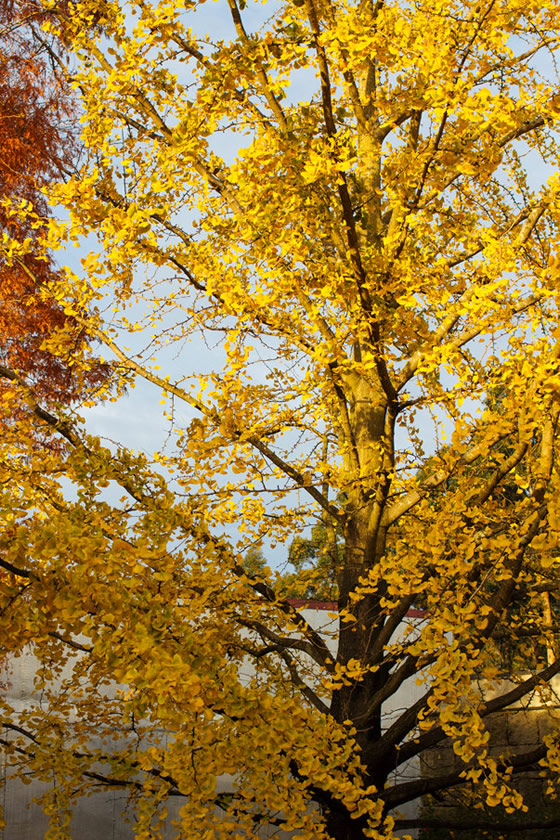
The ginkgo is a hairless, deciduous tree with a straight trunk and pyramid-shaped foliage usually sparsely branched when young, becoming denser with age. Leaves are fan-shaped, 2 to 3 inches (5 to 7.5 centimeters) across, sometimes divided into two lobes.

The ginkgo normally reaches heights of 80 to 100 feet (24 to 30meters) and under favorable conditions grows to 125 feet (38 meters) or more. The bark is reddish-gray and corky, with irregular, wide fissures dividing rough plates. On old trees, the bark becomes gray, rough, and deeply furrowed.

Gnetophytes

Gnetophytes
Gnetophytes

The gnetophytes are a small group of vascular seed plants composing the phylum Gnetophyta, which is one of four phyla of gymnosperms that have living representatives.

The Gnetophyta include only three genera Ephedra, Gnetum, and Welwitschia—each of which belongs to a separate family, in a single order, the Gnetales. The gnetophytes have a number of features in common with the flowering plants (phylum Anthophyta, the angiosperms), which has sparked scientific interest in the evolutionary relationships between the two groups; they are the only gymnosperms, for example, in which vessels occur.

There are about ninety species of gnetophytes. They are diverse in form and size, and their distribution varies widely, from moist, tropical environments to extremely dry deserts. Most gnetophytes are shrubs or woody vines. The leaves occur oppositely or in whorls of three.

Hardy-Weinberg Theorem

Hardy-Weinberg Theorem

The Hardy-Weinberg theorem is the principal that, in the absence of external pressures for change, the genetic makeup of an ideal population of randomly mating, sexually reproducing diploid organisms will remain the same, at what is called Hardy-Weinberg equilibrium.

Population genetics is the branch of genetics that studies the behavior of genes in populations. The two main subfields of population genetics are theoretical (or mathematical) population genetics, which uses formal analysis of the properties of ideal populations, and experimental population genetics,which examines the behavior of real genes in natural or laboratory populations.

Population genetics began as an attempt to extend Gregor Mendel’s laws of inheritance to populations. In 1908 Godfrey H. Hardy, an English mathematician, and Wilhelm Weinberg, a German physician, each independently derived a description of the behavior of allele and genotype frequencies in an ideal population of randomly mating, sexually reproducing diploid organisms.

Molecular Systematics

Molecular Systematics

Molecular systematics is the discipline of classifying organisms based on variations in protein and DNA in order to make fine taxonomic categorizations not solely dependent on morphology.

Taxonomy, sometimes called systematics, is the study of categorizing organisms into logically related groupings. Historically, the way to perform taxonomy was to examine physical characteristics of organisms and classify species according to the most commonly held traits. Unfortunately, this method of systematizing plants and animals assumed that because they have common physical traits, they have common ancestry.

A gross form of this miscategorization might take place, for example, if one suggested that since both mushrooms and ivy can grow on the sides of trees, they are closely related. The two species certainly have common physical traits but only vaguely resemble each other.