Deserts

Deserts
Deserts

Regions characterized by 10 inches or less of precipitation per year as considered deserts. Plants in desert biomes are typically specialized to endure the harsh conditions found there.

Deserts are regions, or biomes, too dry to support grasslands or forest vegetation but with enough moisture to allow specially adapted plants to live. In deserts, hot days alternate with cold nights.

Ninety percent of incoming solar radiation reaches the ground during the day, and 90 percent of that is radiated back out into space at night, the result of the absence of clouds, low humidity, and sparse vegetation.

Deuteromycetes

Deuteromycetes
Deuteromycetes

Deuteromycetes are an artificial group of fungi, of which there exist approximately fifteen thousand species, often referred to as “fungi imperfecti” because their only known reproductive mechanism is asexual.

Deuteromycetes—also known as Deuteromycota, Deuteromycotina, fungi imperfecti, and mitosporic fungi—are fungi that are unable to produce sexual spores and are therefore placed in their own separate phylum. The deuteromycetes are commonly called fungi imperfecti, that is, “imperfect fungi,” a term accepted by many mycologists.

Reproduction

Reproduction in the deuteromycetes occurs in several different forms. Spores, or conidia, may be produced directly on the mycelium (the mass of hyphae, or tubular filaments, forming the body of a fungus) or on a structure of specialized mycelial cell called a condiophore.

Diatoms

Diatoms
Diatoms

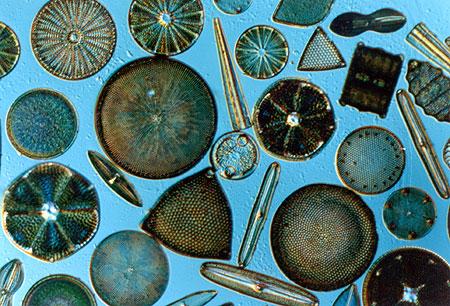
Diatoms are unicellular microorganisms of the phylum Bacillariophyta that are abundant in aquatic, semi aquatic, and moist habitats throughout the world, growing as solitary cells, chains of cells, or members of colonies.

Diatoms, algal organisms of the phylum Bacillariophyta, have more than 250 genera and about 100,000 species. A distinctive siliceous cell wall called a frustule surrounds each vegetative cell. Diatoms have an extensive fossil record, going back some 100 million years to the Cretaceous period.

Deposits of fossil diatoms, known as diatomite or diatomaceous earth, are mined commercially for use as abrasives and filtering aids. One subterranean marine deposit in Santa Maria, California, is about 900 meters in thickness. More than 270,000 metric tons of diatomaceous earth are quarried annually from a deposit in Lompoc, California.

Dinoflagellates

Dinoflagellates
Dinoflagellates

Dinoflagellates, phylumDinophyta, are unicellular and colonial algal organisms from the kingdom Protista named for the spinning motions that result from the movement of their flagella.

The two thousand to four thousand species that make up the Dinophyta phylum typically have two flagella. Dinokonts (Dinophyceae) have one flagellum running in a groove that cuts transversely across the cell and another flagellum, the sulcus, that runs backward in a longitudinal groove and is more or less perpendicular to the transverse one. In desmokonts (Desmophyceae), both flagella arise from a point at the front of the cell.

The motions of the flagella, which make dinoflagellates spin like a top, help give rise to the name, for dinos in Greek means “whirling,” and flagella means “whip.” Single-celled species are the most common, but colonial species exist. The largest dinoflagellate, Noctiluca, may grow as large as 2 millimeters in diameter.

Diseases and Disorders

Diseases and Disorders

The science and study of plant diseases is known as plant pathology, which can be briefly defined as the study of the nature, cause and control of plant disease.

Plant disease is as old as land plants themselves, as shown by the fossil record. Several biblical accounts of plagues have been attributed to plant diseases, and in Roman times cereal rust was so serious that an annual ritual, the Robigalia, was performed to appease the Rust God, Robigo.

In the mid-nineteenth century the Irish Potato Famine, a result of potato late blight disease, caused the deaths of some 800,000 persons and the emigration of about 1.5 million more, mostly to North America. Similarly, but to a lesser extent, brown spot disease of rice caused the Bengal famine of 1943 in India.

DNA in Plants

DNA in Plants
DNA in Plants

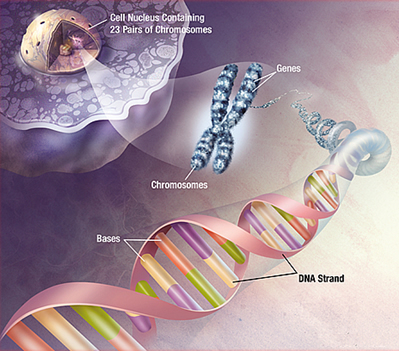
DNA is the hereditary or genetic material, present in all cells, that carries information for the structure and function of living things.

In the plant kingdom, DNA, or deoxyribonucleic acid, is contained within the membrane-bound cell structures of the nucleus, mitochondria, and chloroplasts. DNA has several properties that are unique among chemical molecules.

Recombinant DNA Technology

Recombinant DNA technology result

Recombinant DNA technology makes use of science’s understanding of the molecular structure of DNA, the nucleic acid that encodes genetic information, to alter DNA in order to manipulate genetic traits. Such technology has immense implications for agriculture, horticulture, and the generation of medicinal compounds from plants.

Recombinant DNA technology has been essential for understanding DNA sequences. Because of their large, complex genomes, it was difficult to study one gene in eukaryotes, but recombinant DNA technology has allowed the isolation and amplification of specific DNA fragments facilitating the molecular analysis of genes. In addition, the tools of recombinant DNA technology have been used to create genetically modified plants.

Such modifications include the introduction of resistance to insects, herbicides, viruses, and bacterial and fungal diseases into plants. Plants have also been made to produce antibodies so that plants can serve as edible vaccines.