Brown Algae

Brown Algae
Brown Algae

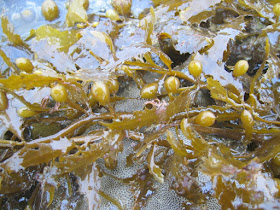
Seaweeds that are brown to olive-green in color belong to the phylum Phaeophyta, or brown algae, which includes between fifteen hundred and two thousand species.

Brown algae (phylum Phaeophyta) are familiar to most people as brown or dark green seaweeds. Some brown algae are microscopic in size, but many are relatively large: One giant kelp measured 710 feet in length. All brown algae are multicellular.

Appearance and Distribution

Brown algae have a body, called a thallus, which is a fairly simple, undifferentiated structure. Some thalli consist of simple branched filaments. Some brown algae have more complex structures called pseudoparenchyma because they superficially resemble the more complex tissues of higher plants.
Bryophytes

Bryophytes
Bryophytes

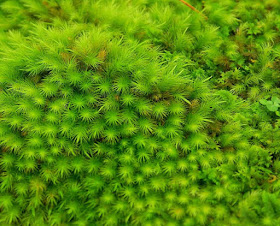
Bryophytes comprise three phyla of nonvascular plants, which generally lack the specialized conductive tissues (xylem and phloem) that are found in the vascular plants, are small in size, and are distributed worldwide in moist, shady habitats.

Bryophytes (from the Greek word bryon, meaning “moss”) were once grouped together into one large phylum. Many botanists today recognize that these organisms belong to at least three distinct phyla: phylum Hepatophyta (the liverworts), phylum Anthocerophyta (the hornworts), and phylum Bryophyta (the mosses).

Origin and Relationships

Bryophytes are thought to have originated more than 430 million years ago, during the Silurian period. Many botanists speculate that bryophytes arose from an ancestor in the green algal order Charales or Coleochaetales based on biochemical, morphological, and life history comparisons.

Bulbs and Rhizomes

Bulbs and rhizomes are modified stems, stem bases, or other underground organs used by plants for food (or energy) storage and in asexual reproduction.

Plants reproduce both sexually and asexually. Although sexual reproduction is part of the typical life cycle of plants, for a variety of reasons a plant may reproduce asexually. Exact duplicates of a plant, called clones, are formed by asexual reproduction.

Asexual Reproduction

Asexual reproduction involves the production of offspring through the formation of propagules by mitosis (the process of nuclear cell division). Because genetic recombination does not occur in mitosis, the offspring are genetically identical to the parent plant.

Asexual reproduction does not occur in all plants; some reproduce asexually only when humans intervene. Asexual reproduction occurs when a single plant produces a vegetative propagule that develops into a separate free-living plant. Many of the propagules that support asexual reproduction are actually highly modified branches. Others are modified roots.

C4 and CAM Photosynthesis


Alternative forms of photosynthesis are used by specific types of plants, called C4 and CAM plants, to alleviate problems of photorespiration and excess water loss.

Photosynthesis is the physiological process whereby plants use the sun’s radiant energy to produce organic molecules. The backbone of all such organic compounds is a skeleton composed of carbon atoms. Plants use carbon dioxide from the atmosphere as their carbon source.

The overwhelming majority of plants use a single chemical reaction to attach carbon dioxide from the atmosphere onto an organic compound, a process referred to as carbon fixation. This process takes place inside specialized structures within the cells of green plants known as chloroplasts.

Cacti and Succulents

Organ Pipe Cactus NM (AZ)... I've been there; I camped there with my wife; it was exhilarating! Sadly, the threat from illegal boarder crossings and drug trafficking will forever prohibit my return.
Wild cacti

Succulents are fleshy plants that store water in natural reservoirs such as stems or leaves. Cacti are a group of flowering plants; all cacti are succulents.

The Cactaceae family includes about 1,650 to 3,500 species of cacti and succulents classified in 130 genera. Because they live in harsh, arid environments, these fleshy, spiny perennial plants have developed a variety of unique characteristics for protection and to retain water, reduce evaporation, and resist heat.

Cacti

The word “succulent” is derived from the Latin term sucus, meaning sap. All cacti are succulents. The word “cactus” is derived from the Greek term kaktos, describing thistles. Botanists estimate cacti first existed during the Mesozoic era, about 130 million years ago. Limited cacti fossil evidence exists (the earliest known specimen is about forty thousand years old).

Calvin cycle

Calvin cycle
Calvin cycle
The Calvin cycle is the principal mechanism that leads to the conversion of carbon dioxide into sugars by plants, algae, photosynthetic bacteria, and certain other bacteria that use chemicals as an energy source instead of light.

The Calvin cycle, also known as the Calvin Benson cycle, is an integral part of the process of photosynthesis in plants, algae, and photosynthetic bacteria. Named after its discoverer, Melvin Calvin of the University of California at Berkeley, its principal product is a three-carbon compound called glyceraldehyde 3-phosphate, or PGAL. Sugars are synthesized using PGAL as a starting material.

Light, absorbed by chlorophyll, is used to synthesize the high-energy compounds adenosine triphosphate (ATP) and reduced nicotinamide adenine dinucleotide phosphate (NADPH). Chlorophyll and the enzymes that are used for synthesis of ATP and NADPH are associated with internal membranes in all photosynthetic cells.

The ATP and NADPH, once formed, are released from the membrane-bound enzymes and diffuse into the surrounding solution inside the cell. The Calvin cycle takes place in this solution, using the ATP and NADPH molecules as a source of energy to drive the conversion of carbon dioxide into PGAL.

Carbohydrates


Common organic chemicals found in all living organisms, important in energy metabolism and structural polymers, carbohydrate molecules are made up of carbon, hydrogen, and oxygen.

Carbohydrates are made of carbon, hydrogen, and oxygen molecules in a 1:2:1 ratio, respectively. This is often simplified using the formula nCH2O, where n represents the number of CH2O subunits in a carbohydrate. This formula should make it clear how the name carbohydrate was derived, as nCH2O is essentially carbon and water.

The simplest carbohydrates are the monosaccharides, or simple sugars. Individual monosaccharides can be joined together to make disaccharides (composed of two monosaccharides), oligosaccharides (short polymers composed of two to several monosaccharides), and polysaccharides (longer polymers composed of numerous monosaccharides).