Showing posts with label transport mechanisms. Show all posts

Active Transport

Active Transport
Active Transport

Active transport is the process by which cells expend energy to move atoms or molecules across membranes, requiring the presence of a protein carrier, which is activated by ATP. Cotransport is active transport that uses a carrier that must simultaneously transport two substances in the same direction. Countertransport is active transport that employs a carrier that must transport two substances in opposite directions at the same time.

Biologists in nearly every field of study have discovered that one of the major methods by which organisms regulate their metabolisms is by controlling the movement of molecules into cells or into organelles such as the nucleus.

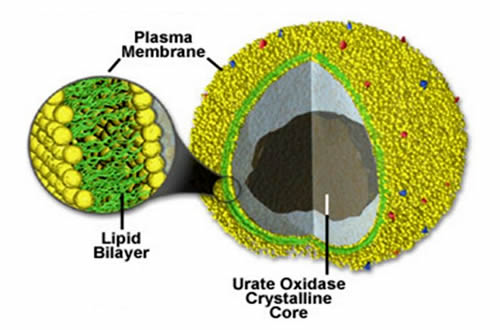
This regulation is possible because of the semipermeable nature of cellular membranes. The membranes of all living cells are fluid mosaic structures composed primarily of lipids and proteins. The lipid molecules are aliphatic, which means that their molecular structure exhibits both a hydrophilic (water-attracted) and a hydrophobic (water-repelling) portion.

Cells and Diffusion

Cells and Diffusion
Cells and Diffusion
Plant cells, like all other living cells, are surrounded by a semipermeable membrane, and any particle moving into or out of the cell must cross this membrane. There are three basic processes by which particles move across plant cell membranes: diffusion, facilitated diffusion, and active transport.

The process of active transport requires the direct input of energy tomove particles across the cell membrane.Diffusion and facilitated diffusion can occur without the direct expenditure of cellular energy.

Diffusion

If one were to drop a sugar cube into glass of water and immediately use a straw to sip a little water from the top of the glass, the water would not have a sweet taste. However, after a few hours, a sip of water from the top would taste sweet.

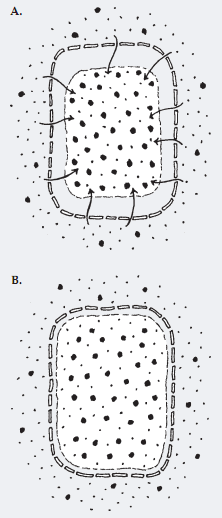
The reason for the change in the taste of the water is diffusion, the net movement of particles down a concentration gradient (that is, from an area of higher concentration to an area of lower concentration). Concentration is the number of particles or amount of substance per unit volume, and a gradient occurs when some factor such as concentration changes from one volume of space to another.

Liquid Transport Systems

Liquid Transport Systems

Liquid transport systems are structures that facilitate the movement of water, via the xylem, from a plant’s roots to its leaves. Water then evaporates from the leaves through the stomata in the process of transpiration.

Water is the most abundant compound in plant cells. It accounts for 85-95 percent of the weight of most plants. It even makes up 5-10 percent of the weight of “dry” seeds. More than 95 percent of the water gathered by a plant, however, evaporates back into the atmosphere, often within hours after being absorbed. This evaporation of water from a living plant is called transpiration. Most transpiration is from leaves.

Plants transpire huge amounts of water. On a warm, dry day, an average-size maple tree transpires more than 200 liters per hour, while herbaceous plants transpire their own weight in water several times per day.

Microbodies

Microbody - Peroxisome

Microbodies, found in cells, are spherical, membrane-bound organelles that play a part in photorespiration and the conversion of fats into sucrose.

Peroxisomes and glyoxysomes are the two major types of microbodies in plant cells. Their vesicles (“packages”) vary in size from 0.3 to 1.5 micrometers in diameter and are self-replicating.

New microbodies are formed by incorporation of required proteins and lipids from the cytoplasm and subsequent splitting when they reach a certain size. Although structurally similar, their roles, and thus their contents, are different.

Nuclear Envelope

Nuclear Envelope
Nuclear Envelope
The nuclear envelope is the outer covering of the nucleus in plant and other eukaryotic cells that acts as a barrier separating the nuclear contents from the surrounding cytoplasm.

The nuclear envelope is a double membrane system, consisting of two concentric membranes. The membranes are separated by a fluid-filled space called the perinuclear cisterna that measures about 20 to 40 nanometers. Like other plant cell membranes, the nuclear envelope consists of two bilayers, both made of phospholipids, in which numerous proteins are embedded.

Attachment sites for protein filaments are stitched on the innermost surface of the nuclear envelope. These protein filaments anchor the molecules of deoxyribonucleic acid (DNA) to the envelope and help to keep them organized. The network of filaments that enmesh the nuclear envelope provides stability.

Osmosis, Simple Diffusion, and Facilitated Diffusion

Osmosis, Simple Diffusion, and Facilitated Diffusion
Osmosis, Simple Diffusion,
and Facilitated Diffusion
Osmosis, simple diffusion, and facilitated diffusion are the processes by which water and other substances—usually small molecules and ions—cross cell membranes.

Transport of materials across cellular membranes is essential to the functioning of plants and other living organisms. It is the movement of materials across these semipermeable barriers that provides the conditions necessary for life, not only for the plasma membrane separating a cell from its environment but also for membranes surrounding organelles within cells.

Unless cells are able to maintain a stable internal environment (homeostasis), growth, development, and metabolism are not possible.

Thus, understanding how substances move across membranes and how membranes select which substances to admit and exclude leads to a better understanding of homeostasis and its maintenance.

Oxidative Phosphorylation

Oxidative Phosphorylation

Oxidative phosphorylation is the sequence of reactions in mitochondria that convert energy from food into cellular energy by synthesizing ATP, the primary energy currency of cells. To drive the second step in oxidative phosphorylation, electrons must be passed to one of the electron carrier molecules of the electron transport system.

The ability to convert the energy from food molecules into cellular energy efficiently is crucial to cell survival. The central conversion system is oxidative phosphorylation, a sequence of reactions that take place in mitochondria (a type of organelle found in plant cells).

These reactions take high-energy electrons and use them to make adenosine diphosphate (ADP) and inorganic phosphate (Pi). The name “oxidative phosphorylation” derives from the fact that organic molecules are oxidized to provide the electrons that are used as an energy source to facilitate the phosphorylation of ADP.

Root Uptake System

Root Uptake System
Root Uptake System

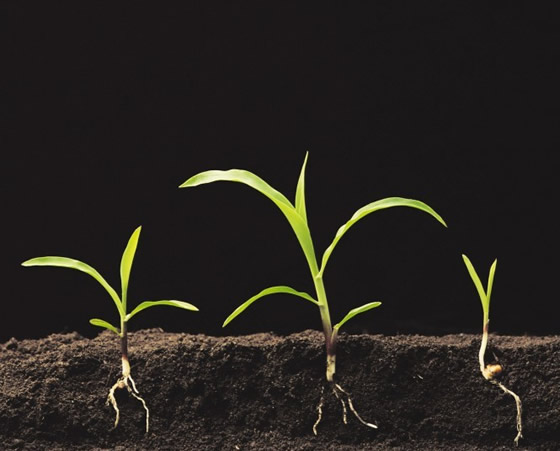
Root uptake systems are processes by which root cells transport water and nutrients from the soil, across the root surface, and to the tissues that will move the water and nutrients throughout the plant.

Fertile soil is a complex mixture of a variety of minerals, many different types of organic matter in different stages of decay, and a host of living microorganisms. This complex medium holds a large quantity of water, which it supplies to plants.

In addition to water, the soil supplies the plants with the thirteen mineral nutrients required for normal growth and development. These nutrients (and the ionic forms taken up by the root) are nitrogen, phosphorus, potassium, sulfur, calcium, magnesium, iron, manganese, boron, chlorine, zinc, copper, and molybdenum.

Vacuoles

Plant cell with vacuole in it

Vacuoles are receptacles within plant cells that hold water, enzymes, eacids, waste products, pigments, or other substances that serve the plant.

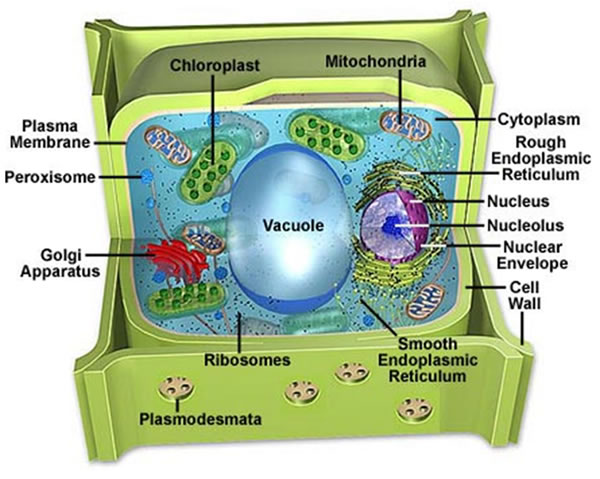
Vacuoles are the largest organelles in most mature plant cells. Frequently constituting more than 90 percent of the volume of a cell, the vacuole presses the rest of the protoplasm against the cell wall. Vacuoles are surrounded by a single fragile membrane called the vacuolar membrane, or tonoplast.

The contents of the vacuole, referred to as vacuolar sap, is 90 to 98 percent water. The vacuole of a typical plant cell occupies approximately 500,000 cubic micrometers. It would take approximately two million of these vacuoles to equal the volume of a sugar cube.

Vesicle-Mediated Transport

Vesicle-Mediated Transport

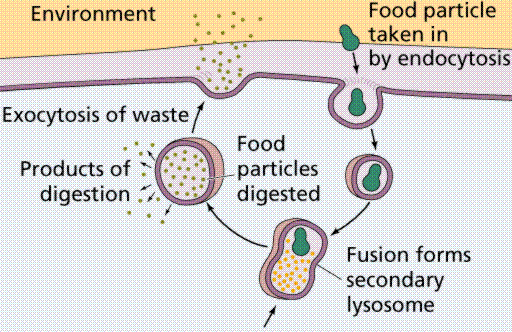
Large substances such as proteins, some amino acids, and poly saccharides are transported into and out of plant cells by vesicle-mediated transport, which involves interaction with and fragmentation of the cell membrane to create a membrane-bound vesicle for internal distribution or external export. Once formed, the vesicle can be transported to its destination within the cell.

Plant cells use several methods to transport ions, polar molecules, and macro molecules through the cell membrane. Some of these can permeate the member via membrane via osmosis.

Small substances, mostly ions, can diffuse through pores composed of trans membrane proteins. Other substances, however—such as glucose, glycogen, and some amino acids—must be transported by membrane-bound carrier molecules in a process called vesicle-mediated transport.

Water and Solute Movement in Plants

Water and Solute Movement in Plants
Plants have two separate transport systems for conducting essential nutrients and water into and through the plant. These take the form of two types of vascular tissue.

One, for water and minerals, the xylem, originates in the root and moves water and minerals upward. The second, the phloem, moves dissolved carbohydrates out of the leaves to other plant parts in which they are used for growth or stored.

Vascular plant tissue is designed to meet the nutritional transport needs of land plants. Xylem tissue has two types of transport cells; both are non living when functional.The smaller in diameter is the tracheid. These have a narrow bore and tapering, overlapping ends.