Botany

Botany

Botany is a very old branch of science that began with early people’s interest in the plants around them. Plant science now extends from that interest to cutting-edge biotechnology. Any topic dealing with plants, from the level of their cellular biology to the level of their economic production, is considered part of the field of botany.

History and Subdisciplines

The origins of this branch of biology are rooted in human beings’ attempts to improve their lot by raising better food crops around 5000 b.c.e. This practical effort developed into intellectual curiosity about plants in general, and the science of botany was born.

Some of the earliest botanical records are included with the writings of Greek philosophers, who were often physicians and who used plant materials as curative agents. In the second century b.c.e. Aristotle had a botanical garden and an associated library.
Bromeliaceae

Bromeliaceae
Bromeliaceae

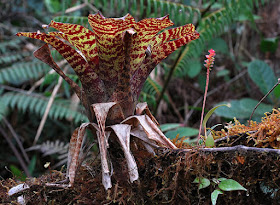
The family Bromeliaceae comprises a group of perennial, monocotyledon herbs or trees that often age slowly.

Important ornamentals (called bromeliads) as well as sources of food and medicines, Bromeliaceae have substantial economic value and are widely cultivated. The colors of the leaves offer decorative foliage, and the flowers are of astonishing hues due to the rich content of pigment-forming substances known as anthocyanins.

Based on ovary position, habit, and floral and pollen morphology, the family Bromeliaceae has been split into three subfamilies: subfamily Pitcairnioideae, subfamily Tillandsioideae, and subfamily Bromelioideae.

Brown Algae

Brown Algae
Brown Algae

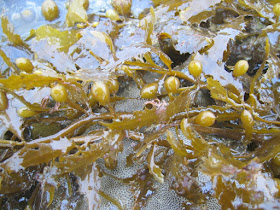
Seaweeds that are brown to olive-green in color belong to the phylum Phaeophyta, or brown algae, which includes between fifteen hundred and two thousand species.

Brown algae (phylum Phaeophyta) are familiar to most people as brown or dark green seaweeds. Some brown algae are microscopic in size, but many are relatively large: One giant kelp measured 710 feet in length. All brown algae are multicellular.

Appearance and Distribution

Brown algae have a body, called a thallus, which is a fairly simple, undifferentiated structure. Some thalli consist of simple branched filaments. Some brown algae have more complex structures called pseudoparenchyma because they superficially resemble the more complex tissues of higher plants.

Bryophytes

Bryophytes
Bryophytes

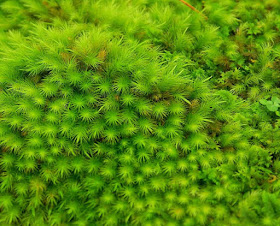
Bryophytes comprise three phyla of nonvascular plants, which generally lack the specialized conductive tissues (xylem and phloem) that are found in the vascular plants, are small in size, and are distributed worldwide in moist, shady habitats.

Bryophytes (from the Greek word bryon, meaning “moss”) were once grouped together into one large phylum. Many botanists today recognize that these organisms belong to at least three distinct phyla: phylum Hepatophyta (the liverworts), phylum Anthocerophyta (the hornworts), and phylum Bryophyta (the mosses).

Origin and Relationships

Bryophytes are thought to have originated more than 430 million years ago, during the Silurian period. Many botanists speculate that bryophytes arose from an ancestor in the green algal order Charales or Coleochaetales based on biochemical, morphological, and life history comparisons.

Bulbs and Rhizomes

Bulbs and rhizomes are modified stems, stem bases, or other underground organs used by plants for food (or energy) storage and in asexual reproduction.

Plants reproduce both sexually and asexually. Although sexual reproduction is part of the typical life cycle of plants, for a variety of reasons a plant may reproduce asexually. Exact duplicates of a plant, called clones, are formed by asexual reproduction.

Asexual Reproduction

Asexual reproduction involves the production of offspring through the formation of propagules by mitosis (the process of nuclear cell division). Because genetic recombination does not occur in mitosis, the offspring are genetically identical to the parent plant.

Asexual reproduction does not occur in all plants; some reproduce asexually only when humans intervene. Asexual reproduction occurs when a single plant produces a vegetative propagule that develops into a separate free-living plant. Many of the propagules that support asexual reproduction are actually highly modified branches. Others are modified roots.

C4 and CAM Photosynthesis


Alternative forms of photosynthesis are used by specific types of plants, called C4 and CAM plants, to alleviate problems of photorespiration and excess water loss.

Photosynthesis is the physiological process whereby plants use the sun’s radiant energy to produce organic molecules. The backbone of all such organic compounds is a skeleton composed of carbon atoms. Plants use carbon dioxide from the atmosphere as their carbon source.

The overwhelming majority of plants use a single chemical reaction to attach carbon dioxide from the atmosphere onto an organic compound, a process referred to as carbon fixation. This process takes place inside specialized structures within the cells of green plants known as chloroplasts.

Cacti and Succulents

Organ Pipe Cactus NM (AZ)... I've been there; I camped there with my wife; it was exhilarating! Sadly, the threat from illegal boarder crossings and drug trafficking will forever prohibit my return.
Wild cacti

Succulents are fleshy plants that store water in natural reservoirs such as stems or leaves. Cacti are a group of flowering plants; all cacti are succulents.

The Cactaceae family includes about 1,650 to 3,500 species of cacti and succulents classified in 130 genera. Because they live in harsh, arid environments, these fleshy, spiny perennial plants have developed a variety of unique characteristics for protection and to retain water, reduce evaporation, and resist heat.

Cacti

The word “succulent” is derived from the Latin term sucus, meaning sap. All cacti are succulents. The word “cactus” is derived from the Greek term kaktos, describing thistles. Botanists estimate cacti first existed during the Mesozoic era, about 130 million years ago. Limited cacti fossil evidence exists (the earliest known specimen is about forty thousand years old).