Showing posts with label soil. Show all posts

Agronomy

Agronomy
Agronomy

Agronomy is a group of applied science disciplines concerned with land and soil management and crop production. Agronomists’ areas of interest range from soil chemistry to soil-plant relationships to land reclamation.

The word "agronomy" derives from the ancient Greek agros (field) and nemein (manage) and therefore literally means "field management". The American Society of Agronomy defines agronomy as "the theory and practice of crop production and soil management". There are many specialties within the study of agronomy.

Agronomic Specialties

Agronomy is the family of disciplines investigating the production of crops supplying food, forage, and fiber for human and animal use. It studies the stewardship of the soil upon which those crops are grown. Agronomy covers all aspects of the agricultural environment, from agroclimatology to soil-plant relationships.

Biofertilizers

Biofertilizers
Biofertilizers
The use of biofertilizers, biological systems that supply plant nutrients such as nitrogen to agricultural crops, could reduce agriculture’s dependency on chemical fertilizers, which are often detrimental to the environment.

Plants require an adequate supply of the thirteen mineral nutrients necessary for normal growth and reproduction. These nutrients, which must be supplied by the soil, include both macronutrients (nutrients required in large quantities) and micronutrients (nutrients required in smaller quantities). As plants grow and develop, they remove these essential mineral nutrients from the soil.

Because normal crop production usually requires the removal of plants or plant parts, the nutrients are continuously removed from the soil. Therefore, the long-term agricultural utilization of any soil requires periodic fertilization to replace lost nutrients.

Nitrogen is the plant nutrient that is most often depleted in agricultural soils, and most crops respond to the addition of nitrogen fertilizer by increasing their growth and yield. Therefore, more nitrogen is applied to cropland than any other fertilizer component.

Composting

Composting
Composting

Compost is a mixture of organic ingredients used for fertilizing or enriching land. Composting is the practice of making and using compost.

Composting is a way for gardeners and farmers to enrich and otherwise improve the soil while reducing the flow of household waste to landfills. Essentially the slow, natural decay of dead plants and animals, composting is a natural form of recycling in which living organisms decompose organic matter.

The decay of dead plants and animals starts when microorganisms in soil feed on dead matter, breaking it down into smaller compounds usable by plants.

Farmland

Farmland
Farmland

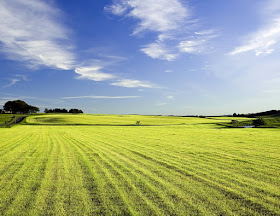
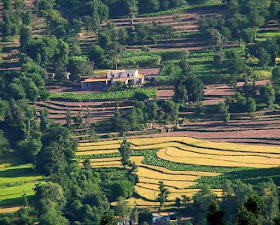
Land used as farmland typically has good agricultural soil and is able to produce food and fiber in an efficient way.

Land suitable for agriculture is not evenly distributed throughout the world; it tends to be concentrated in limited areas. In order to be considered good farmland, land must be located at the proper elevation and slope.

Because the soil supplies the mineral nutrients required for plant growth, it must also have the appropriate fertility, texture, and pH. Approximately 64 percent of the world’s land has the proper topography, and about 46 percent has satisfactory soil fertility to grow crops.

Fertilizers

Fertilizers
Fertilizers

Fertilizers are materials used to modify the chemical composition of soil in order to enhance plant growth. They represent an important use of natural resources because agricultural systems depend upon an ability to retain soil fertility.

Soil is a dynamic, chemically reactive medium, and agricultural soils must provide structural support for plants, contain a sufficient supply of plant nutrients, and exhibit an adequate capacity to hold and exchange minerals.

Topsoil, the 6-inch layer of soil covering the earth’s landmasses, is the root zone for the majority of the world’s food and fiber crops. As plants grow and develop, they remove the essential mineral nutrients from the soil. Because crop production normally requires the removal of plants or plant parts, nutrients are continuously being removed from the soil.

Halophytes

Halophytes: Sea Arrowgrass (Triglochin maritimum)

Halophytes are salt-resistant or salt-tolerant plants that thrive and complete their life cycles in soils or waters containing high salt concentrations. Despite high salt content in the tissues of halophytes, they can be grown and harvested as food or animal fodder.

The Salinity-Plant Relationship

Salts are ionic molecules that typically dissolve in water and split into cations (positively charged ions) and anions (negatively charged ions). Rain dissolves salts from minerals in rocks and soil.

These dissolved salts then either enter surface waters or percolate down to an aquifer. In arid regions where there is low rainfall, water evaporates quickly, leaving its salt load behind, leading to the development of saline soils, salt lakes, and brackish groundwater.

Root Uptake System

Root Uptake System
Root Uptake System

Root uptake systems are processes by which root cells transport water and nutrients from the soil, across the root surface, and to the tissues that will move the water and nutrients throughout the plant.

Fertile soil is a complex mixture of a variety of minerals, many different types of organic matter in different stages of decay, and a host of living microorganisms. This complex medium holds a large quantity of water, which it supplies to plants.

In addition to water, the soil supplies the plants with the thirteen mineral nutrients required for normal growth and development. These nutrients (and the ionic forms taken up by the root) are nitrogen, phosphorus, potassium, sulfur, calcium, magnesium, iron, manganese, boron, chlorine, zinc, copper, and molybdenum.

Serpentine Endemism

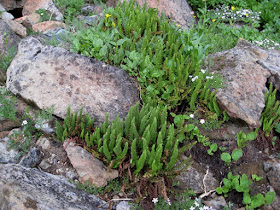
Shasta Fern on Serpentine Soil

Serpentine endemics are plants that grow only in serpentine soils. These uncommon soils present serious challenges to plants and are often sparsely covered with dwarfed vegetation.

Serpentine rock is one form of ultramafic rock, an uncommon rock found in mountain-building zones. Soils derived from ultramafic rock are called serpentine soils.

The most important chemical characteristics of ultramafic rock and of the serpentine soils formed from it are high magnesium concentrations; low calcium concentrations; low calcium/magnesium ratios; low concentrations of other macro nutrients (such as nitrogen, phosphorus and potassium); high concentrations of toxic heavy metals (such as nickel, chromium, and cobalt); and low micro nutrient (molybdenum, boron) concentrations. All these factors are detrimental to plant growth.

Soil

Soil is a product of the physical and chemical breakdown of the earth’s surface into small fragments, including sand, silt, and clay. Soil contains the products of organic matter decomposition—the composting of dead plant and animal debris.

Soils are classified on the basis of soil profile and soil formation. They can be grouped according to a number of characteristics, including agronomic use, color, organic matter content, texture, and moisture condition.

Typical soil is about 45 percent minerals and about 5 percent organic matter. The other 50 percent of soil consists of pores that hold either water or air. The liquid portion of soil contains dissolved minerals and organic compounds, produced by plants and microorganisms.

Soil Degradation

Soil Degradation
Soil Degradation

A decline in soil quality, productivity, and usefulness due to natural causes, human activities, or both, is known as soil degradation. It is often caused by unfavorable alterations in one or all of a soil’s physical, chemical, and biological attributes.

In 1992, for the first global study of soil degradation, the World Resources Institute in Washington, D.C., reported that 3 billion acres of land worldwide had been seriously degraded since World War II. They also stated that 22 million acres of once usable land could no longer support crops.

Natural Processes and Human Activities

Of the total acreage lost to soil degradation, almost two-thirds is in Asia and Africa; most of the loss is attributable to water and wind erosion resulting from agricultural activities, overgrazing, deforestation, and firewood collection.

Soil Management

Soil Management
Soil Management

Tillage, conservation, and cropping practices are soil management techniques that are used to preserve soil resources while optimizing soil use.

Soils are managed differently depending on their intended use. Soil management groups are soil types with similar adaptations or management requirements for specific purposes, such as use with crops or cropping rotations, drainage, fertilization, forestry, highway engineering, and construction.

In managing soil for agriculture, soil management includes all tillage and planting operations, cropping practices, fertilization, liming, irrigation, herbicide and insecticide application, and other treatments conducted on or applied to the soil surface for the production of plants.

Tundra and High-Altitude Biomes

Tundra and High-Altitude Biomes

Regions where no trees grow because of frozen soil or extreme water runoff due to steep grades (at high altitudes) are known as tundra. High altitude biomes have similar limitations on the growth of plant life.

Tundra landscapes appear where long, cold winters, a permanently frozen subsoil, and strong winds combine to prevent the development of trees. The resulting landscapes tend to be vast plains with low-growing forbs and stunted shrubs.

Vast areas of this biome encircle the northernmost portions of North America and Eurasia, constituting the Arctic tundra. Climatic conditions atop high mountains at all latitudes are similar; these small, isolated areas are called the alpine tundra.