Showing posts with label pollution. Show all posts

Acid Precipitation

forest damaged by acid rain

Acid precipitation is rain, snow, or mist which has a pH lower than unpolluted precipitation. Increased levels of acid precipitation have significant effects on food chains and ecosystems.

Precipitation—rain, snow, hail, sleet, or mist—is naturally acidified by carbonic acid (H2CO3). Carbon dioxide (CO2) in the atmosphere reacts with water molecules, lowering the pH of precipitation to 5.6. A pH scale is used to measure a solution’s acidity or alkalinity; pH is defined as the negative logarithm of the concentration of hydrogen ions, H+ . A solution with a pH of 7.0 is neutral. A pH lower than 7 is acidic, and a pH greater than 7 is alkaline.

Other acidic substances are also present in the atmosphere, causing "unpolluted" precipitation to have a pH approaching 5.0. Solutions with a pH of 5.0 or less have concentrations of hydroxyl ion, or OH , and carbonate ion, or CO3 , approaching zero.

Marine Plants

Marine plants
Marine plants

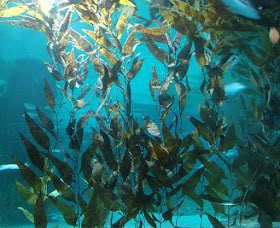
Marine plants grow near the surface of salt water and ice, within reach of sunlight necessary for photosynthesis. Algae, the most plentiful type of marine plant, form the foundation of the food chain and crucial to a balanced ecosystem.

Water is essential to life. The earliest plants, primarily algae, formed in bodies of saline water covering prehistoric Earth. During the Silurian period, approximately 441 million to 410 million years ago, some aquatic plants began to grow on land, but many plants remained solely water based.

These marine plants have provided fundamental nourishment in the food chain. No marine animals would have evolved or been able to survive if marine plants had not existed.

Soil Salinization

Soil salinization
Soil salinization

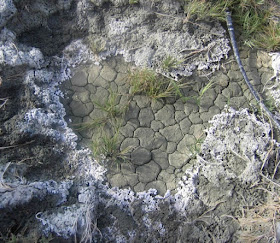
Soil salinization is a process in which water-soluble salts build up in the root zones of plants, blocking the movement of water and nutrients into plant tissues.

Soil salinization rarely occurs naturally. It becomes an environmental problem when it occurs as a result of human activity, denuding once vegetated areas of all plant life.

Rainwater is virtually free of dissolved solids, but surface waters and underground waters (groundwater) contain significant quantities of dissolved solids, ultimately produced by the weathering of rocks.